Table of Contents
Key Takeaways
- All-terrain scooters need pneumatic tires, full suspension, and at least 4 inches of ground clearance
- Four-wheel configurations provide the stability required for uneven ground and slopes
- Real-world range on rough terrain is typically 50-60% of the manufacturer’s flat-surface rating
- Weight capacity, tire tread, and hill-climbing angle are more important specs than top speed
- Most all-terrain models are too large and heavy for car trunk transport and require vehicle lifts
Beyond the Sidewalk
Standard mobility scooters are designed for smooth, flat surfaces: mall floors, paved sidewalks, grocery store aisles. They perform well in those environments, but take one onto a gravel path, a grassy yard, or a bumpy park trail and the limitations become obvious immediately. Small wheels get stuck. Low ground clearance means the frame scrapes over bumps. Thin tires lose traction on loose surfaces. The lack of meaningful suspension turns every root and pothole into a jarring impact.
All-terrain mobility scooters are built for the world beyond pavement. They allow you to navigate hiking trails, beach boardwalks, campgrounds, farmland, gardens, and the unpaved spaces that standard scooters simply cannot handle. If you have been avoiding outdoor activities because your current scooter cannot keep up, an all-terrain model can change what is possible.
This guide covers the features that make a scooter genuinely capable off-road, what to look for when shopping, and the practical considerations around cost, transport, and insurance.
What Defines an All-Terrain Scooter
Not every scooter marketed as “outdoor” is truly all-terrain. Some models simply have slightly larger wheels than indoor scooters but lack the suspension, ground clearance, and traction to handle genuinely rough surfaces. A true all-terrain mobility scooter has several distinguishing characteristics.
Tires
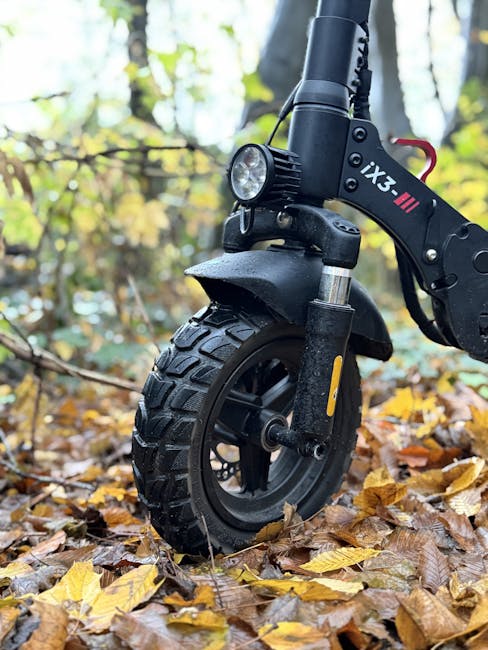
Tires are the single most important all-terrain feature. Look for:
- Pneumatic (air-filled) tires: These absorb impacts from rocks, roots, and uneven ground far better than solid tires. The air cushion prevents hard jolts from reaching the rider. Typical tire sizes on all-terrain models are 13 to 16 inches in diameter, compared to 8 to 10 inches on standard scooters.
- Aggressive tread patterns: Deep, knobby treads grip loose gravel, dirt, wet grass, and mud. Smooth or lightly treaded tires slip on these surfaces.
- Wide tire profile: Wider tires distribute weight over a larger contact area, which prevents sinking into soft ground and improves stability on slopes.
The tradeoff with pneumatic tires is puncture risk. Carrying a portable tire repair kit or investing in tire sealant is practical insurance for trail use. Some riders opt for foam-filled tires, which eliminate punctures but sacrifice some of the cushioning that makes pneumatic tires comfortable.
Suspension
Full suspension (both front and rear) is essential for all-terrain use. The suspension absorbs the constant impacts of rough surfaces, protecting both the rider and the scooter’s frame and electronics. Without rear suspension, the rider bears the full force of every bump through the seat, leading to back pain, fatigue, and reduced time before needing to stop.
Adjustable suspension is a significant advantage because it lets you tune the stiffness for your weight and the terrain type. Softer settings work well on dirt trails with frequent small bumps, while stiffer settings prevent bottoming out on larger obstacles like curbs or deep ruts.
For a general overview of how scooters compare to powered wheelchairs for outdoor use, see our power wheelchair vs scooter comparison.
Ground Clearance
Ground clearance is the distance between the lowest point of the scooter frame and the ground surface. Standard scooters have 2 to 3 inches of clearance, which is sufficient for smooth surfaces but not for rough ground where rocks, branches, and uneven surfaces can catch the underside of the frame.
All-terrain scooters should have at least 4 inches of ground clearance, and models designed for more serious off-road use offer 5 to 6 inches. This prevents the frame from bottoming out on obstacles and allows the scooter to pass over uneven terrain without getting stuck.
Motor and Hill Climbing
Off-road terrain includes inclines. A scooter that handles flat gravel paths well may struggle on even moderate hills if the motor is not powerful enough. Look for:
- Motor power: 400 watts minimum, 500 to 700 watts for serious off-road use and hill climbing.
- Hill-climbing grade: Expressed as a percentage or degree. A 10-degree (roughly 18%) grade handles most park trails and moderate slopes. Some high-end all-terrain models handle grades up to 12 to 15 degrees.
- Low-speed torque: Important for navigating obstacles and climbing from a standing start on an incline. High torque at low speeds prevents the scooter from stalling on steep sections.
Choosing the Right Configuration
Three Wheels vs Four Wheels
For all-terrain use, four-wheel scooters are the clear choice. The additional contact point provides stability on uneven and sloped surfaces that three-wheel models cannot match. Three-wheel scooters have a tighter turning radius, which is useful indoors, but they tip more easily on side slopes and are less stable on loose surfaces.
If you plan to use your scooter both indoors and on trails, a four-wheel all-terrain model can handle indoor use as well. The larger turning radius (typically 60 to 80 inches) requires more space to maneuver in tight hallways, but it works in most homes and all commercial buildings.
Weight Capacity
All-terrain scooters come in standard and heavy-duty weight capacity options. Standard all-terrain models support 250 to 350 pounds. Heavy-duty all-terrain models support 400 to 500 pounds. The same buffer rule applies here: choose a scooter rated at least 50 to 75 pounds above your body weight plus anything you carry.
Higher weight on rough terrain increases demands on every component. The motor works harder, the suspension compresses further, and the tires carry more load through impacts. Under-specifying weight capacity for off-road use accelerates wear significantly.
Battery Range
Manufacturer range ratings are calculated on flat, smooth pavement with a rider at the lower end of the weight capacity. Real-world range on all-terrain surfaces drops substantially. A scooter rated for 25 miles on pavement may deliver 12 to 15 miles on gravel trails and hills.
For trail use, look for scooters with batteries rated 50 amp-hours or higher. Dual battery packs are available on some models and can push range above 30 miles on pavement (15 to 20 miles on rough terrain). Always plan for the shorter range estimate, and carry a phone in case you need assistance on a longer outing.
Practical Considerations
Transport
All-terrain scooters are large and heavy, typically 150 to 300 pounds. They do not fold or disassemble for trunk storage. Transporting one requires a vehicle lift (hitch-mounted platform lift rated for the scooter’s weight), a ramp into a van or SUV, or a small utility trailer.
If transport convenience is a higher priority than off-road capability, a folding or disassembling scooter may be a more practical choice for your lifestyle, though you will sacrifice the rough-terrain performance.
Maintenance
Off-road use is harder on a scooter than pavement use. Plan for more frequent maintenance:
- Tires: Check pressure before each outing (pneumatic tires lose air gradually). Inspect tread for wear and embedded debris.
- Suspension: Listen for squeaking or clunking, which indicates worn bushings or springs. Adjustable suspension should be re-tuned if your weight changes or the ride quality deteriorates.
- Battery: Rough terrain drains batteries faster. Follow the manufacturer’s charging guidelines carefully to maximize battery lifespan.
- Frame and fasteners: Vibration from rough surfaces can loosen bolts and screws over time. Periodically check the tiller, seat mount, and wheel axle fasteners.
Cost
All-terrain mobility scooters typically range from $2,500 to $6,000 depending on features, weight capacity, and brand. High-end models with dual motors, advanced suspension, and extended-range batteries can exceed $7,000.
Medicare Part B may cover a portion of the cost if the scooter is prescribed for in-home mobility needs. However, the “in-home” requirement means Medicare coverage is based on your need to move around inside your home, not your desire to use the scooter outdoors. In practice, many people qualify for Medicare coverage of a mobility scooter and then choose an all-terrain model, paying the difference between what Medicare covers and the all-terrain model’s price out of pocket.
Where You Can Ride
Most public parks, nature trails, and outdoor spaces that allow pedestrians also allow mobility scooters. National parks, state parks, and local trail systems are generally accessible under the ADA. However, narrow single-track hiking trails, wilderness areas, and trails with steps or very steep grades may not be passable even with an all-terrain scooter.
Before heading to a new trail, check with the park management about trail surface conditions, width, and grade. Many parks now provide accessibility information on their websites, including which trails are suitable for mobility devices.
On public roads and sidewalks, mobility scooter laws and regulations apply the same as for any other scooter. Most states classify mobility scooters as pedestrian devices, meaning you ride on sidewalks and crosswalks rather than in traffic lanes.
For a broader look at how to select the right scooter based on your overall needs and lifestyle, our guide to choosing a mobility scooter covers all categories side by side.
FAQ
Can I use an all-terrain scooter on the beach?
Some all-terrain scooters can handle firm, packed sand near the waterline, but soft, dry sand is extremely difficult for any wheeled device. Sand creates heavy rolling resistance and can bog down even wide, knobby tires. If beach access is a specific goal, look for models marketed for beach use with extra-wide tires (4 inches or wider) and very low gearing. Boardwalks and paved beach paths are accessible to any all-terrain scooter without issue.
How fast do all-terrain mobility scooters go?
Most all-terrain scooters have a top speed of 5 to 10 mph, with some high-end models reaching 12 to 15 mph on flat ground. However, top speed matters less than torque and stability on rough terrain. You will rarely use maximum speed on a trail because uneven surfaces require slower, controlled driving. Focus on hill-climbing ability and low-speed handling rather than top speed when comparing models.
Are all-terrain scooters too big to use indoors?
All-terrain scooters are larger than standard models, typically 28 to 32 inches wide with a turning radius of 60 to 80 inches. They fit through standard commercial doorways (36 inches) but may be tight in older homes with 30-inch interior doorways. They work well in grocery stores, malls, and most public buildings. If your home has narrow hallways or tight corners, measure before purchasing. Some people use an all-terrain scooter for outdoor activities and a smaller indoor scooter or walker for daily home use.
Do I need a license to drive an all-terrain mobility scooter?
No. Mobility scooters, including all-terrain models, are classified as medical devices or pedestrian mobility devices in the United States. They do not require a driver’s license, registration, or insurance. However, they are subject to local pedestrian and mobility device regulations, which vary by state and municipality. Most jurisdictions restrict scooters to sidewalks, crosswalks, and pedestrian paths rather than road lanes, regardless of the scooter’s speed capability.
The MobilityLane Team
Written by a caregiver with 18+ years of experience supporting family members with chronic illness and mobility challenges, and medical training in mobility recovery. We research and write about mobility solutions to help people maintain independence and quality of life.
Learn more about us →Stay Independent, Stay Informed
Get our weekly guide to mobility solutions, funding tips, and home safety resources delivered to your inbox.
Thank you! Check your inbox to confirm your subscription.
Something went wrong. Please try again.
Join 1,000+ caregivers and families. Unsubscribe anytime.
Related Guides

The Complete Guide to Choosing a Mobility Scooter
Learn how to choose the right mobility scooter with our buyer's guide covering types, features, battery range, Medicare ...
Heavy-Duty Mobility Scooters: What to Know Before You Buy
A complete guide to heavy-duty and bariatric mobility scooters. Covers weight capacities, motor power, suspension, terra...

Mobility Scooter Laws and Regulations: Where Can You Legally Ride?
Understand the rules for riding a mobility scooter on sidewalks, roads, in stores, and on public transit. Covers ADA rig...