
Table of Contents
Key Takeaways
- The Hugo Adjustable Offset Cane is our top pick for most people with balance concerns
- Offset handles provide better weight distribution than traditional crook handles
- Quad canes (4-point base) offer significantly more stability than single-point canes
- Use the cane on the opposite side of your weaker or painful leg
- Cane handle height should align with the crease of your wrist when arms hang naturally
Choosing the Right Cane for Balance Support
A walking cane is often the first mobility aid people consider when balance becomes a concern. It is less bulky than a walker, easier to store than a rollator, and provides enough support for many people to walk confidently and independently. But the range of cane styles available can be overwhelming, and the wrong type can actually make balance worse rather than better.
The key to choosing a cane for balance is understanding that not all canes provide the same level of support. People with diabetic neuropathy, for example, often need a wider base of support than a standard single-point cane provides. A decorative crook-handle cane from a department store is not the same as a medical-grade offset cane prescribed by a physical therapist. The handle shape, base type, weight capacity, and height adjustment all affect how much stability the cane provides.
We reviewed dozens of canes and consulted with physical therapists to identify the 7 best walking canes for people with balance problems. Our picks cover every major cane type so you can find the right match for your specific needs.
Types of Canes for Balance
Before we get to our picks, it helps to understand the major cane categories and how they differ in terms of balance support.
Single-Point Canes
Single-point canes have one tip at the bottom and are the most common type of walking cane. They are lightweight, easy to use, and suitable for people who need light balance assistance. However, they provide the least stability of any cane type because they have only one point of ground contact.
Best for: People with mild balance issues who need a light touch of support.
Offset Handle Canes
Offset (also called “swan neck”) canes have a handle that is positioned directly over the shaft of the cane rather than curved to one side like a traditional crook handle. This design places your weight directly over the cane’s tip, which provides better support and reduces wrist strain. Physical therapists recommend offset handles for most medical applications.
Best for: People recovering from surgery, those with moderate balance concerns, and anyone who uses a cane for extended periods.
Quad Canes (Small Base)
Small-base quad canes have four small feet arranged in a compact pattern at the base. They provide significantly more stability than single-point canes because the four-point base resists tipping in any direction. The small base is narrow enough to use on stairs (one foot per step) and in tight spaces.
Best for: People with moderate to significant balance problems who need more stability than a single-point cane but want to maintain maneuverability.
Quad Canes (Large Base)
Large-base quad canes have four feet spread in a wider pattern, providing the maximum stability available in a cane. They can stand upright on their own when released, which is useful for people who need to free both hands temporarily. The tradeoff is that the wide base can be awkward on stairs and in narrow spaces.
Best for: People with significant balance challenges, those recovering from stroke, and people who need the most stable cane available.
Folding Canes
Folding canes collapse into 3 to 5 sections connected by an elastic cord, making them easy to store in a purse, bag, or car glove compartment. They are convenient for people who only need a cane in certain situations (long walks, uneven terrain, crowded spaces). Folding canes are available in single-point and offset handle styles.
Best for: People who need a cane intermittently and want a portable option they can tuck away when not in use.
Seat Canes
Seat canes (also called cane seats or walking stick seats) have a small fold-out seat built into the handle. When you need to rest, you unfold the seat and sit down. These are not a substitute for a proper chair, but they provide a welcome rest option during long outings.
Best for: People who walk moderate distances but need occasional rest stops and do not want the bulk of a rollator.
Quick Comparison
| Cane | Type | Weight | Capacity | Handle | Height Range | Price |
|---|---|---|---|---|---|---|
| Hugo Adjustable Offset | Offset single-point | 0.9 lbs | 250 lbs | Offset ergonomic | 30”-39” | $20-$30 |
| Drive Aluminum Quad (Small) | Small-base quad | 2.2 lbs | 300 lbs | Offset | 28”-37” | $25-$40 |
| Medline Large Base Quad | Large-base quad | 2.8 lbs | 300 lbs | Offset | 29”-38” | $30-$50 |
| HurryCane Freedom Edition | Single-point pivoting | 1.0 lbs | 350 lbs | T-handle | 30.5”-37.5” | $25-$40 |
| Vive Folding Cane | Folding single-point | 0.8 lbs | 250 lbs | T-handle | 33”-37” | $15-$25 |
| Drive Deluxe Folding Cane | Folding offset | 0.9 lbs | 300 lbs | Offset | 33”-37” | $20-$35 |
| Switch Sticks Seat Cane | Seat cane | 2.0 lbs | 220 lbs | T-handle/seat | 33”-37” | $40-$70 |
Our Top 7 Picks
1. Hugo Adjustable Offset Cane - Best Overall
The Hugo Adjustable Offset Cane is our top recommendation for most people with balance concerns. The offset handle design positions your weight directly over the cane tip for maximum stability, and the ergonomic gel grip is comfortable enough for extended use without hand fatigue.
The height adjusts from 30 to 39 inches in 1-inch increments, covering the range for most adults from about 5’0” to 6’2”. The aluminum shaft is sturdy at just 0.9 pounds, and the 250-pound weight capacity is adequate for most users. The rubber tip provides solid grip on hard floors, tile, and outdoor surfaces.
What sets the Hugo apart from other offset canes in its price range is the combination of a well-designed grip, smooth height adjustment, and overall build quality. It feels like a $40 cane at a $25 price point.
What we like:
- Offset handle provides excellent weight distribution
- Gel grip reduces hand fatigue on long walks
- Wide height adjustment range
- Lightweight at under 1 pound
What to consider:
- 250-pound weight capacity is lower than quad canes
- Single-point base provides less stability than quad models
- Rubber tip wears down with regular outdoor use (replacements are inexpensive)
Best for: Most people with mild to moderate balance concerns. The best all-around starting cane for balance support.
Price range: $20 to $30
2. Drive Aluminum Quad Cane (Small Base) - Best for Moderate Balance Issues
The Drive Small Base Quad Cane provides a significant stability upgrade over single-point canes without the bulk of a large-base model. The four-foot base creates a stable platform that resists tipping in all directions, making it ideal for people who need more support than a standard cane can provide.
At 2.2 pounds, it is heavier than a single-point cane but light enough for daily use. The offset handle is height-adjustable, and the small base is narrow enough to use on most staircases (one step at a time). The 300-pound weight capacity accommodates a wider range of users than most single-point canes.
What we like:
- Four-point base provides excellent stability
- Small base fits on stairs and in tight spaces
- 300-pound weight capacity
- Offset handle for proper weight distribution
What to consider:
- Heavier than single-point canes at 2.2 pounds
- Base can catch on carpet edges and rugs
- Four feet create a slightly different walking rhythm than single-point
Best for: People with moderate balance problems who have outgrown a single-point cane but find large-base quad canes too bulky.
Price range: $25 to $40
3. Medline Large Base Quad Cane - Best for Maximum Stability
The Medline Large Base Quad Cane provides the most stability of any cane on our list. The wide four-foot base creates a broad support platform that is remarkably resistant to tipping. It can stand upright on its own when you let go, which is a practical advantage when you need to free both hands to open a door or reach for something.
This is the type of quad cane that physical therapists frequently recommend for stroke recovery patients and people with significant balance deficits. The wide base and offset handle work together to provide a support level that approaches a walker while maintaining the one-handed convenience of a cane.
At 2.8 pounds, it is the heaviest cane on our list, and the wide base can be awkward in tight spaces and on narrow stairs. But for people who need maximum cane stability, those tradeoffs are worthwhile.
What we like:
- Widest, most stable base available in a cane
- Stands upright on its own when released
- 300-pound weight capacity
- Frequently recommended by physical therapists for stroke recovery
What to consider:
- Heaviest option at 2.8 pounds
- Wide base is awkward on stairs and in narrow spaces
- More conspicuous than a slim single-point cane
- Can feel cumbersome for people who need only light support
Best for: People with significant balance challenges, stroke recovery patients, and anyone who needs the maximum stability a cane can provide.
Price range: $30 to $50
4. HurryCane Freedom Edition - Best Ergonomic Handle
The HurryCane’s standout feature is its pivoting base and ergonomic T-handle. The base pivots to stay flat on the ground regardless of the angle of the cane, which means it maintains full ground contact even on slopes and uneven surfaces. The T-handle is shaped to fit the natural curve of your palm, distributing pressure across the hand rather than concentrating it in one spot.
At 1 pound with a 350-pound weight capacity, the HurryCane offers an impressive strength-to-weight ratio. The freestanding design (it stands up on its own) is a nice convenience feature. Height adjustment is tool-free and covers 30.5 to 37.5 inches.
What we like:
- Pivoting base maintains ground contact on uneven surfaces
- Ergonomic T-handle reduces hand strain
- 350-pound weight capacity (highest on our list for a single-point style)
- Freestanding design
What to consider:
- Pivoting base has more moving parts than a simple rubber tip
- T-handle style is a matter of personal preference (some prefer offset)
- Not a quad cane, so stability is less than four-point models
- Pivot mechanism can collect dirt and debris
Best for: People who walk on varied terrain and want an ergonomic handle that reduces hand fatigue.
Price range: $25 to $40
5. Vive Folding Cane - Best Portable Option
The Vive Folding Cane collapses into a compact package that fits easily into a handbag, backpack, or car glove compartment. When unfolded, it locks into a rigid shaft that feels secure and stable. At just 0.8 pounds, it is the lightest cane on our list.
The T-handle is comfortable and the height adjusts from 33 to 37 inches. The 250-pound weight capacity is standard. A wrist strap keeps the cane tethered to your hand when you need to use both hands temporarily. The elastic cord that connects the folding sections is the same tensioning system used in trekking poles and is reliable over thousands of fold/unfold cycles.
What we like:
- Folds to fit in a purse or bag
- Lightest cane on our list at 0.8 pounds
- Reliable folding mechanism
- Wrist strap included
What to consider:
- Height range (33 to 37 inches) is more limited than non-folding models
- Folding joint can develop slight play over years of heavy use
- Not as rigid as a solid-shaft cane
- 250-pound capacity is standard but not exceptional
Best for: People who want a cane they can carry discreetly and deploy when needed. Great for travel, shopping, and events.
Price range: $15 to $25
6. Drive Deluxe Folding Cane - Best Folding Offset Cane
The Drive Deluxe Folding Cane combines the portability of a folding design with the superior ergonomics of an offset handle. This is a less common combination (most folding canes use straight or T-handles) and makes it an excellent choice for people who want both the proper weight distribution of an offset handle and the convenience of a packable cane.
The 300-pound weight capacity is above average for a folding cane, and the offset handle provides better support than the Vive’s T-handle for people with moderate balance concerns. At 0.9 pounds, it adds negligible weight over straight-handle folding models.
What we like:
- Offset handle on a folding cane (rare combination)
- 300-pound weight capacity
- Folds compactly for storage and travel
- Height adjustable from 33 to 37 inches
What to consider:
- Height range is limited compared to non-folding models
- Slightly heavier than the most basic folding canes
- Offset handle adds a slight amount of bulk when folded
- Limited color options compared to straight-handle folding canes
Best for: People who want the ergonomic benefits of an offset handle in a portable, folding package.
Price range: $20 to $35
7. Switch Sticks Seat Cane - Best for Rest Breaks
The Switch Sticks Seat Cane is a clever solution for people who need occasional rest breaks during walks and outings. The handle unfolds into a small tripod seat that supports up to 220 pounds. When walking, it functions as a standard cane with a T-handle.
The seat is not meant for extended sitting (it is a narrow perch, not a chair), but for a quick 2 to 5 minute rest during a long outing, it can be the difference between finishing the trip and cutting it short. The tripod base provides reasonable stability when used as a seat on firm, level ground.
At 2 pounds, it is heavier than standard single-point canes due to the seat mechanism. The 220-pound seat capacity limits the user base, and the seat function only works on flat, hard surfaces.
What we like:
- Built-in seat for rest breaks during outings
- Functions as a standard cane when walking
- Tripod seat base provides stability when sitting
- Unique solution for people who tire easily
What to consider:
- 220-pound seat weight capacity is relatively low
- Seat only works on flat, hard surfaces
- Heavier than standard canes at 2 pounds
- Seat is a narrow perch, not comfortable for extended sitting
- Walking stability is less than an offset handle cane
Best for: People who walk moderate distances and need occasional rest stops but do not want the bulk of a rollator with a seat.
Price range: $40 to $70
How to Choose the Right Cane Height
Proper cane height is critical for both comfort and balance support. A cane that is too tall forces your shoulder upward and reduces your ability to lean on it. A cane that is too short makes you hunch forward, which worsens balance and causes back strain.
The Wrist Crease Method
- Stand upright in your normal shoes on a flat surface.
- Let your arms hang relaxed at your sides.
- The top of the cane handle should align with the crease of your wrist.
- When you grip the handle at this height, your elbow should bend at approximately 15 to 20 degrees.
This slight bend is important. It allows you to push down effectively through the cane while maintaining a natural posture. If your elbow is completely straight, the cane is too short. If your elbow is bent more than 25 to 30 degrees, the cane is too tall.
Which Side to Use
Use the cane on the opposite side of your weaker or painful leg. If your right knee is the problem, hold the cane in your left hand. This is biomechanically correct because the cane and the weaker leg work together during the gait cycle to distribute your weight more evenly.
The exception is for general balance support without a specific weak side. In this case, use the cane on your dominant hand side for the best control.
When a Cane Is Enough vs. Needing a Walker
A cane provides balance assistance, not full weight-bearing support. Understanding this distinction is important for safety.
A cane may be enough if you:
- Can walk without a device but feel unsteady on uneven surfaces
- Need light support to feel confident during longer walks
- Have recovered enough from surgery to bear most of your weight through your legs
- Experience mild dizziness or occasional imbalance
- Want a portable device for specific situations (crowded spaces, outdoor walks)
You likely need a walker or rollator if you:
- Need to bear significant weight through your arms while walking
- Experience frequent or severe balance loss
- Cannot walk more than a few steps without feeling like you might fall
- Have been recently discharged from surgery with weight-bearing restrictions
- Feel unsafe with only a cane for support
If you are unsure, a physical therapy evaluation can determine the appropriate level of support. Many people start with a walker or rollator and transition to a cane as they improve. For a detailed comparison, see our rollator vs walker guide.
Physical Therapy Tips for Cane Use
Practice on flat surfaces first. Before taking your cane outdoors or onto uneven terrain, practice at home on smooth, flat floors until the movement pattern feels natural.
Look ahead, not at the cane. It is tempting to watch the cane and your feet, but this hunches your posture forward and actually worsens balance. Look ahead at where you are going and trust the cane’s position by feel.
Use the cane every time. Inconsistent cane use is almost as risky as no cane at all. Your body adapts to the support, and skipping the cane “just for a quick trip” is when many falls happen.
Replace the rubber tip regularly. A worn cane tip loses traction, especially on smooth or wet surfaces. Check the tip monthly and replace it when the tread pattern is worn smooth. Replacement tips cost $3 to $8 and are available at any pharmacy or online.
Consider a cane with a wrist strap. A wrist strap keeps the cane attached to your hand when you need to reach for a door handle, pick up an item, or use your phone. Without a strap, setting down the cane creates a trip hazard and means you are temporarily without support.
FAQ
What type of cane is best for balance?
For mild balance issues, an offset single-point cane provides the best combination of support and convenience. For moderate to significant balance problems, a quad cane (small or large base) provides substantially more stability. Physical therapists most commonly recommend offset handle canes for balance support because the offset positions your weight directly over the cane tip.
How much does a good walking cane cost?
Quality walking canes range from $15 to $70 depending on the type. Basic single-point and folding canes cost $15 to $30. Offset handle canes cost $20 to $40. Quad canes cost $25 to $50. Specialty canes (seat canes, ergonomic models) cost $30 to $70. Medicare Part B covers canes when prescribed by your doctor, typically paying 80% of the approved amount.
Can I use a cane if I have arthritis in my hands?
Yes, but handle choice matters. Look for canes with large, ergonomic handles that distribute pressure across the entire palm rather than concentrating it in the fingers. Foam or gel grips are more comfortable than hard plastic for arthritic hands. Offset handles are generally better than crook handles because they reduce the wrist angle. If hand arthritis is severe, a forearm crutch (which transfers load to the forearm rather than the hand) may be a better option.
Do I need a prescription for a walking cane?
You do not need a prescription to buy a cane from a retail store or online. However, if you want Medicare or insurance to cover the cost, you will need a prescription from your doctor. Getting a prescription also gives you access to Medicare-approved DME suppliers and professional fitting advice.
How long does a walking cane last?
A quality aluminum or steel cane lasts 3 to 10 years depending on usage. The rubber tip is the most common wear item and should be replaced every 3 to 6 months with regular use (or sooner if the tread is worn smooth). The shaft and handle are durable and rarely need replacement unless the cane is damaged in a fall or accident.
Can I use two canes for better balance?
Using two canes (bilateral cane use) provides more support than a single cane but less than a walker. It is sometimes recommended during the transition period between a walker and a single cane, particularly after hip or knee surgery. If you need the support of two canes for daily walking, a walker or rollator may actually be more practical and provide better stability. Discuss bilateral cane use with your physical therapist to determine if it is appropriate for your situation.
The MobilityLane Team
Written by a caregiver with 18+ years of experience supporting family members with chronic illness and mobility challenges, and medical training in mobility recovery. We research and write about mobility solutions to help people maintain independence and quality of life.
Learn more about us →Stay Independent, Stay Informed
Get our weekly guide to mobility solutions, funding tips, and home safety resources delivered to your inbox.
Thank you! Check your inbox to confirm your subscription.
Something went wrong. Please try again.
Join 1,000+ caregivers and families. Unsubscribe anytime.
Related Guides
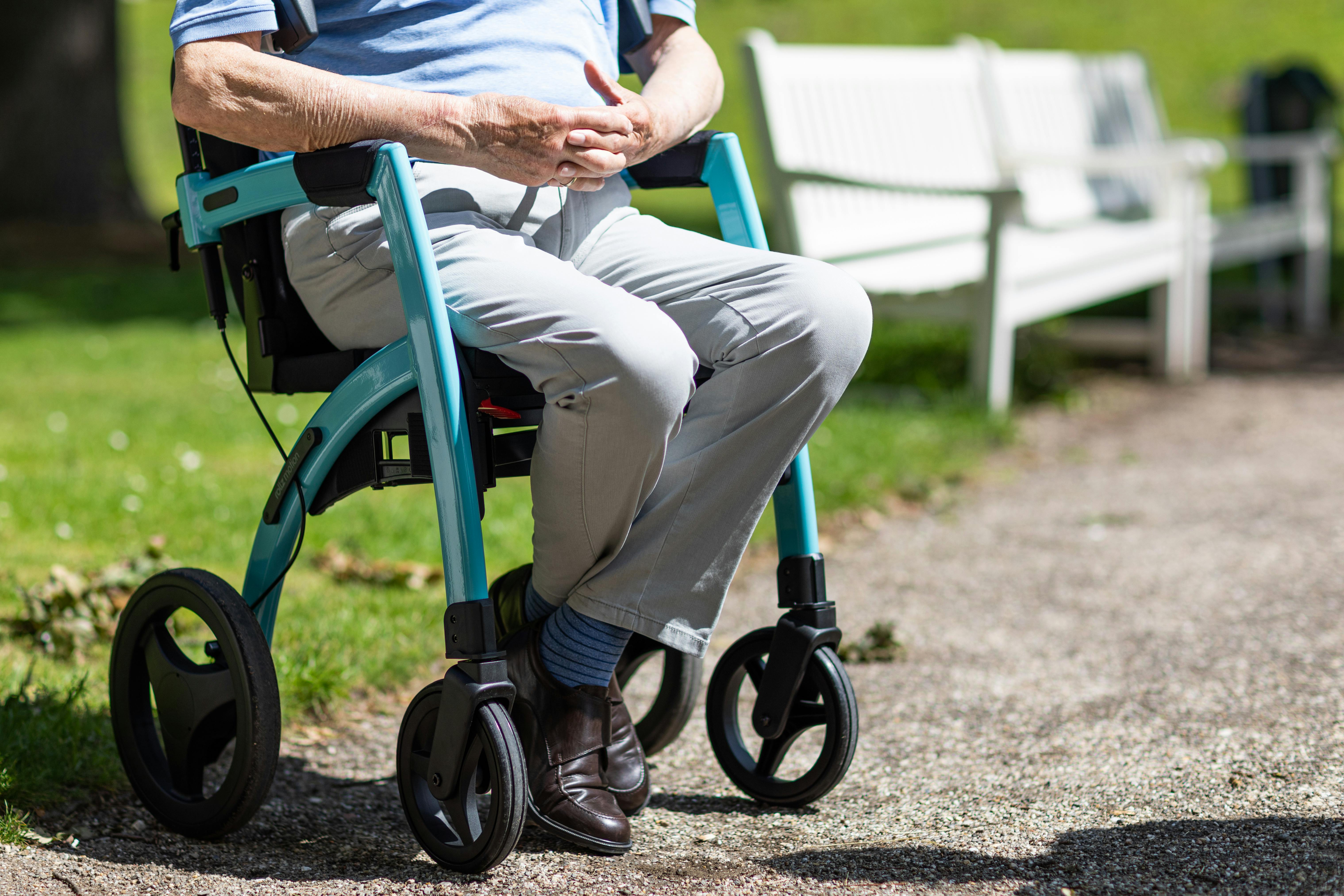
Rollator vs Walker: Which Mobility Aid Is Right for You?
Compare rollators and walkers side by side. Learn the key differences in wheels, brakes, seats, and stability to find th...
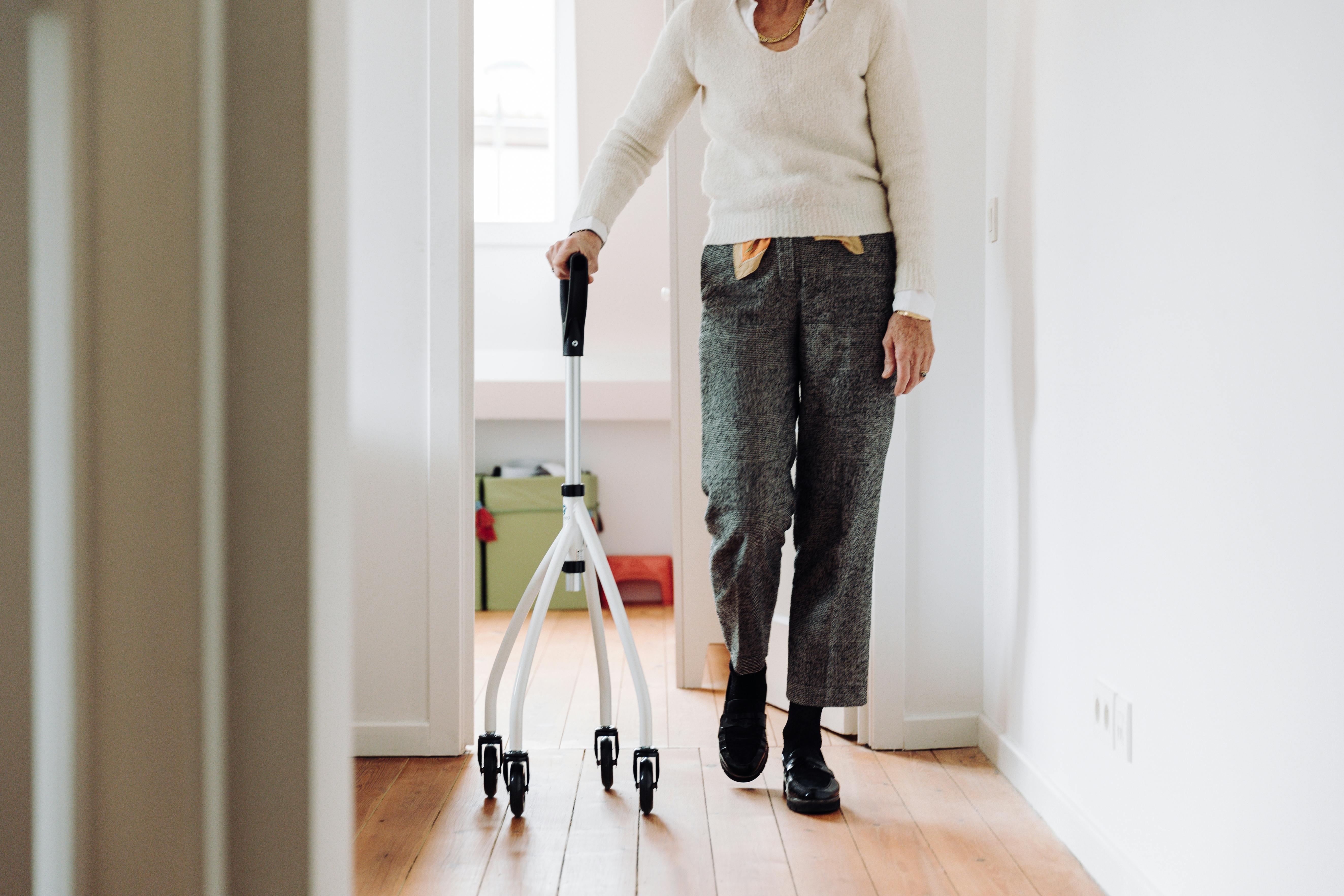
Best Lightweight Rollators for Seniors: Top 7 Reviewed
We reviewed the 7 best lightweight rollators for seniors in 2026. Compare weights, features, prices, and find the right ...
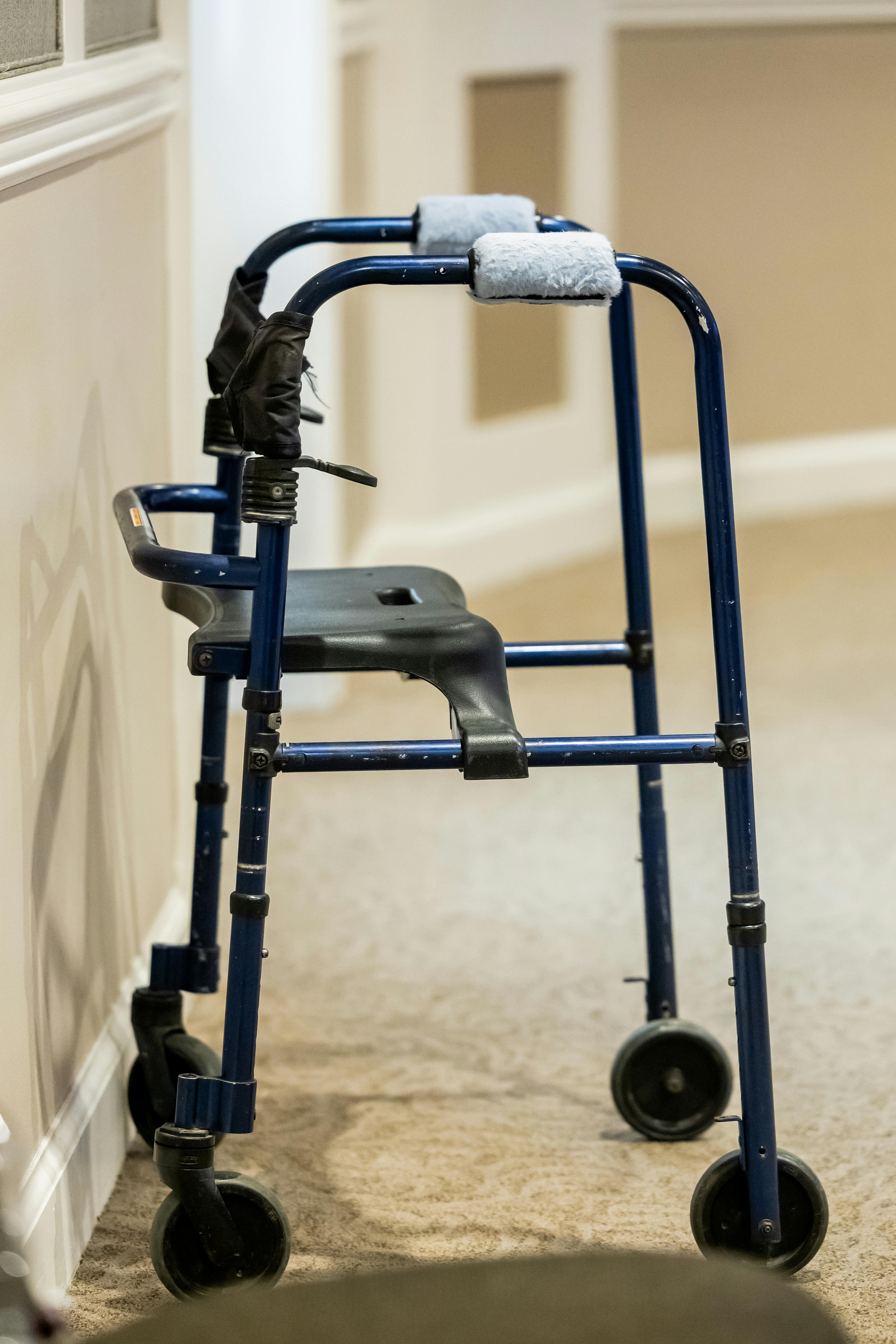
Best Mobility Aids After Hip Replacement Surgery
A recovery timeline guide to the best mobility aids after hip replacement surgery. Covers walkers, canes, raised toilet ...