
Table of Contents
Key Takeaways
- Diabetic peripheral neuropathy affects roughly half of people with long-standing diabetes and dramatically increases the risk of falls, foot injuries, and unnoticed wounds.
- Mobility aids for neuropathy are selected primarily for stability rather than support. Even people who feel strong may benefit from a cane or walker because neuropathy robs the body of balance information, not strength.
- Proper footwear is as important as any mobility device. Well-fitted therapeutic shoes protect numb feet from injury and improve stability.
- Individual needs vary significantly. Some people need only a single-point cane for confidence on uneven ground, while others need a rollator or wheelchair for longer distances. Work with a physical therapist to determine what is right for you.
- Daily foot inspection is not optional. Because neuropathy removes the pain signals that would normally alert you to an injury, visual checks are the only reliable way to catch problems early.
Understanding Diabetic Neuropathy
Diabetic peripheral neuropathy is nerve damage caused by prolonged exposure to high blood sugar. Over time, elevated glucose damages the small blood vessels that supply the nerves in the feet and legs, and the nerves themselves begin to lose function. The process usually starts in the toes and gradually moves up the foot and ankle, sometimes reaching the calves and beyond.
The symptoms are not what most people expect. Early neuropathy often feels like burning, tingling, or electrical sensations in the feet, particularly at night. As it progresses, the feet can feel numb, cold, or as if the person is walking on thick cotton. Some people lose sensation entirely without realizing it, discovering the problem only when a minor cut goes unnoticed and becomes infected.
From a mobility standpoint, the loss of sensation is the biggest issue. Walking depends on constant feedback from the feet to the brain. Your nervous system uses that feedback to adjust balance, shift weight, and place each step correctly. When neuropathy disrupts those signals, the brain is working with incomplete information, and the risk of missteps rises sharply. People with neuropathy often describe feeling unsteady even when their leg muscles are strong. They are not imagining it. They are missing the sensory inputs that normally make walking feel automatic.
This is why mobility aids for neuropathy are chosen differently than mobility aids for weakness or arthritis. The goal is usually not to bear body weight or reduce load on a painful joint. The goal is to provide an external reference point that restores some of the balance information the nerves can no longer deliver.
When to Consider a Mobility Aid
Many people resist using a cane or walker because they see it as a sign of decline. For diabetic neuropathy, this framing misses the point. The real question is not whether you look older with a cane. The real question is whether you can trust your balance on a dark staircase, a wet sidewalk, or uneven grass. If the answer is no, a mobility aid is the difference between staying active and staying home.
Several signals suggest it is time to consider one. If you have caught yourself stumbling or lurching unexpectedly. If you no longer trust yourself on stairs without a handrail. If you avoid outings because you worry about falling. If you have actually fallen, even once, in the past year. If your feet feel noticeably numb when you stand up. If you have been told by a physical therapist or doctor that your balance has declined. Any of these is a reason to talk about mobility aids seriously.
It is important to get a clinical evaluation before buying anything. A physical therapist can assess your balance, gait, and functional needs and recommend the specific type of aid that fits your situation. The right choice depends on your strength, the severity of your neuropathy, the environments where you walk, and your personal goals. A wrong choice, such as using a cane that is too short or a walker that is poorly adjusted, can actually increase fall risk rather than reduce it.
Canes for Early Neuropathy
For people with mild to moderate neuropathy who still have reasonable leg strength, a single-point cane often provides enough external balance input to restore confidence. The cane works by giving your brain a third contact with the ground, which supplies information your numb feet no longer provide reliably. This is sometimes called proprioceptive feedback, and it can make a surprising difference even for people who feel physically strong.
A cane must be sized correctly. When standing with the cane tip on the ground next to your foot, the top of the handle should reach your wrist crease with your arm hanging relaxed at your side. A cane that is too short makes you lean forward. A cane that is too long forces your shoulder up and tires your arm. Small sizing errors add up over a full day of use. Our how to use a cane properly guide walks through fitting, handedness, and the basic gait pattern for canes, which many new users find counterintuitive at first.
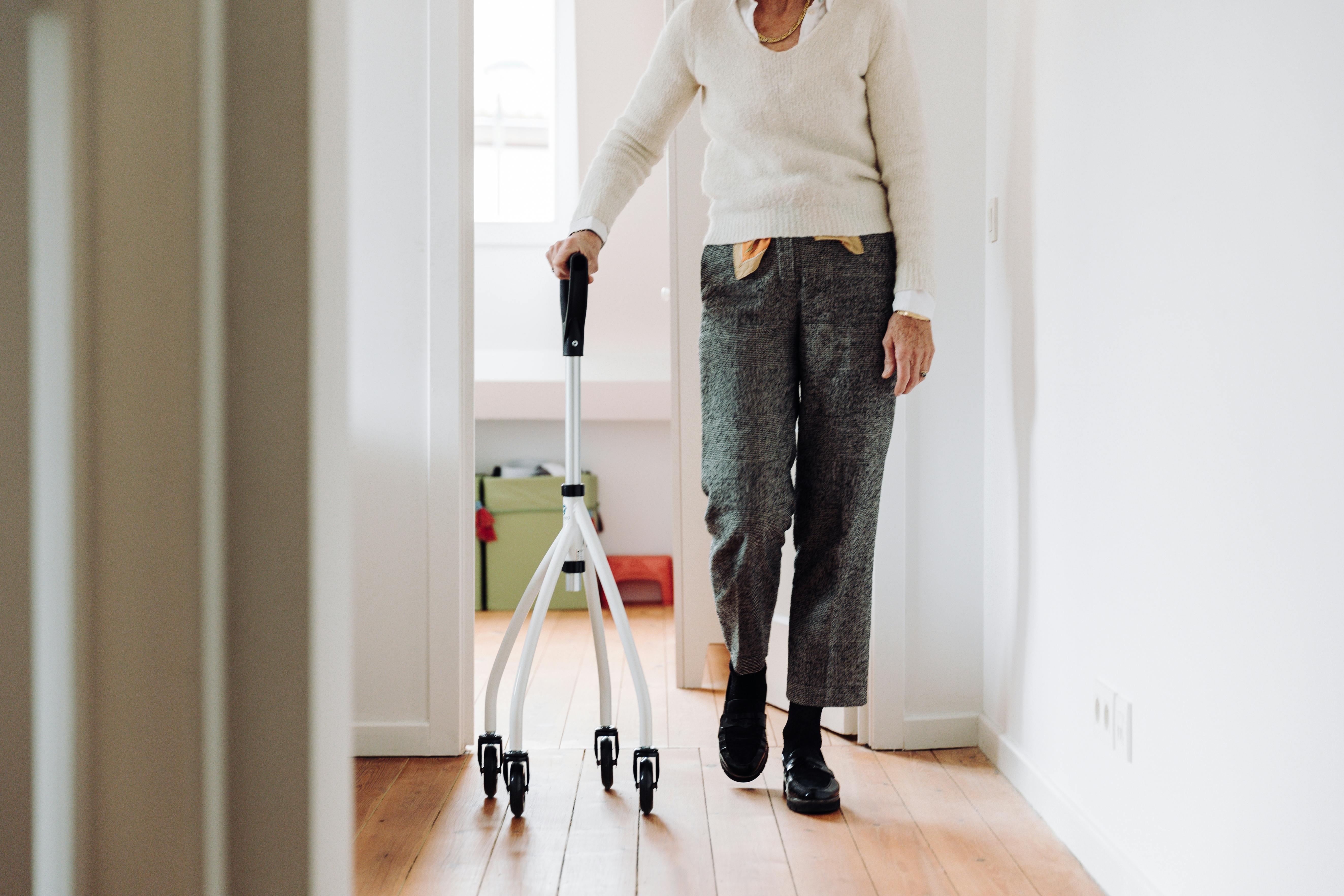
For people with balance problems specifically, a cane with a wider base offers more stability than a standard single-point cane. Quad canes and offset canes are two common options, and they trade some maneuverability for significantly more security. Our guide to the best walking canes for balance covers the differences and when each type is most appropriate.
The handle matters too. People with diabetic neuropathy sometimes also have neuropathy in their hands, and a cane handle that digs into a numb palm is both uncomfortable and unsafe. Ergonomic handles, foam grips, and molded palm shapes all distribute pressure better than a traditional hooked wooden handle.
Rollators and Walkers for More Support
When a cane is no longer enough, the next step up is usually a rollator, which is a wheeled walker with brakes, a seat, and storage. Rollators are particularly well suited to diabetic neuropathy because they provide constant four-point contact with the ground, a stable frame to push against, and a seat for rest breaks when walking distances become tiring.
Traditional non-wheeled walkers are lighter and cheaper, but for most people with neuropathy a rollator is a better choice. The reason is that neuropathy often comes with reduced cardiovascular fitness, reduced hip and knee mobility, and lower overall energy. Lifting a walker with every step drains energy fast and can cause people to abandon the device within a few weeks. A rollator glides, which makes the whole experience less exhausting and encourages longer walks.
Weight is a significant factor. A heavy rollator is harder to load into a car, harder to lift up a curb, and harder to maneuver in tight spaces. For active users who plan to take their device outside the home, a lightweight model makes a dramatic difference. Our guide to the best lightweight rollators compares the most practical options and explains which features matter most for daily use.
Rollators also come with important safety features that new users sometimes overlook. Always engage the brakes before sitting down. Never use the rollator seat as a transport, sitting on it while someone pushes you, unless the manufacturer specifically rates the rollator as a transport chair. And always adjust the handle height to match your body, not whoever used the device last.
Footwear Is Half the Equation
No mobility aid can compensate for bad shoes on neuropathic feet. Footwear for diabetic neuropathy should meet several criteria at once. It should have a deep, wide toe box that does not pinch or rub against any part of the foot. It should have a firm but cushioned sole that provides shock absorption and good traction. It should fit smoothly throughout, with no seams, ridges, or stitching that could press into numb skin. And it should close securely, because a shoe that slips off mid-step is a major fall hazard.
Therapeutic shoes, sometimes called diabetic shoes, are designed specifically for these needs. In the United States, Medicare covers one pair of therapeutic shoes per year for people with diabetes and qualifying conditions, along with inserts. Ask your primary care doctor or endocrinologist about the program if you have not already received a pair. For people with foot deformities or history of foot ulcers, custom-molded shoes may be prescribed instead.
Never walk barefoot or in socks without shoes, even at home. A stepped-on toy, a dropped pin, a splinter in the floorboards, or even a small pebble can all cause a wound that you do not feel and do not notice until it has become serious. A house shoe or slipper with a closed toe and non-slip sole should be kept next to the bed so that your first step each morning is protected.
Environmental Factors That Raise Fall Risk
People with diabetic neuropathy face fall risks that go beyond balance and footwear. Home lighting is a frequent problem. When your feet cannot feel the floor reliably, your eyes have to do more of the work, and a dim hallway can transform from manageable to dangerous. Add motion-activated lights in hallways, bathrooms, and stairwells. Replace bulbs in rooms you use frequently with brighter options.
Rugs and floor transitions are another hazard. A throw rug that is unsecured becomes a slip hazard the moment a foot catches its edge. Remove unnecessary rugs entirely or secure them firmly with non-slip backing. Pay attention to thresholds between rooms, because a small change in floor height can trip someone who cannot feel where their feet are landing.
Stairs deserve particular attention. Install handrails on both sides if only one exists. Mark step edges with a contrasting strip so they are visible in low light. Never carry items that block your view of your feet, and take stairs one step at a time rather than alternating feet if you feel unsteady. For caregivers, our caregiver fall prevention guide covers home modifications and daily habits that reduce risk across a variety of mobility conditions.
Bathrooms are responsible for a disproportionate share of falls. Install grab bars near the toilet and in the shower, use a non-slip bath mat inside and outside the tub, and consider a shower chair for longer bathing sessions when standing becomes tiring. Wet feet on a smooth surface is a worst-case scenario for someone with neuropathy.
Daily Foot Care Is Part of Mobility
Mobility and foot health are tightly linked for people with diabetic neuropathy. A wound that goes unnoticed can quickly become a serious infection, and a serious infection can lead to hospitalization, amputation, and permanent loss of mobility. This is not a hypothetical concern. It is one of the leading causes of mobility loss in people with long-term diabetes.
Inspect your feet every day, ideally in the morning when the light is good and you are alert. Use a mirror to see the soles and heels if you cannot raise your feet comfortably. Look for cuts, blisters, cracks, redness, swelling, or any area that looks different from the surrounding skin. Check between the toes. If you see anything concerning, do not wait. Contact your primary care provider or podiatrist within a day or two.
Keep skin moisturized but avoid applying lotion between the toes, where moisture can encourage fungal infection. Trim toenails straight across, or have a podiatrist do it if you cannot see or reach your toes safely. Never attempt to treat corns, calluses, or ingrown nails yourself with sharp tools, because a small self-treatment injury can escalate quickly on numb skin.
Because neuropathy and other fall-risk conditions often overlap in older adults, the same person may need to manage multiple issues at once. Our guide to osteoporosis fall prevention equipment covers related strategies for people whose fall risk is compounded by fragile bones, which dramatically raises the consequences of any fall that does occur.
Working With Your Care Team
Choosing mobility equipment for diabetic neuropathy is not a solo project. Your endocrinologist or primary care doctor should be aware of your balance concerns so they can assess whether your neuropathy is progressing and rule out other contributing causes like medication side effects, vitamin deficiencies, or inner ear issues. A physical therapist can evaluate your gait and recommend specific devices and exercises. A podiatrist can assess your feet and prescribe therapeutic footwear. An occupational therapist can assess your home environment and suggest modifications.
Insurance coverage varies. Medicare typically covers canes, walkers, and rollators when they are prescribed as medically necessary, along with therapeutic shoes for people meeting specific criteria. Medicaid and private insurance usually cover similar categories but with their own requirements. Ask your care team to help you navigate the paperwork, because a denied claim for a $100 walker is often worth appealing.
Individual needs vary significantly, and what works well for one person with neuropathy may not be the right choice for another. Take the time to find the combination of equipment, footwear, and home modifications that fits your specific situation, and revisit the question as your condition changes. Early investment in the right tools can preserve years of independence that would otherwise be lost to falls.
Frequently Asked Questions
I have diabetic neuropathy but feel steady. Do I really need a mobility aid?
Not necessarily. Some people with neuropathy remain steady enough that a mobility aid would offer little benefit. However, because neuropathy is progressive and because people often overestimate their own balance, a formal assessment with a physical therapist is worth doing periodically. They can measure your balance objectively and spot changes before a fall happens.
Are canes or walkers better for neuropathy?
It depends on the severity. For mild to moderate neuropathy with preserved strength, a cane often provides enough external balance feedback. For more advanced neuropathy, lower body weakness, or history of falls, a rollator or standard walker gives more support. A physical therapist is the best source of guidance on which fits your situation.
Can using a mobility aid make my balance worse over time?
Generally no. The concern that using a device will cause deconditioning is overstated for most older adults. People who avoid mobility aids out of this fear often end up falling, and a fall typically causes much more functional loss than any deconditioning from using a device. That said, combining mobility aid use with regular strength and balance exercises is the best approach.
Does Medicare cover therapeutic shoes for diabetic neuropathy?
Medicare Part B covers one pair of therapeutic shoes per year, along with inserts, for people with diabetes who meet specific criteria and have a prescription from a qualifying doctor. Requirements include a diagnosis of diabetes plus at least one qualifying condition such as previous foot ulcer, calluses that could lead to ulcer, foot deformity, or poor circulation. Ask your primary care provider about the program.
What should I do if I notice a wound on my foot?
Contact your primary care provider or podiatrist promptly, ideally within one to two days. Do not apply over-the-counter remedies or attempt to treat it yourself, and do not wait to see if it gets better on its own. Foot wounds in people with diabetes can progress rapidly and need professional evaluation. Keep weight off the foot as much as possible until you are seen.
The MobilityLane Team
Written by a caregiver with 18+ years of experience supporting family members with chronic illness and mobility challenges, and medical training in mobility recovery. We research and write about mobility solutions to help people maintain independence and quality of life.
Learn more about us →Stay Independent, Stay Informed
Get our weekly guide to mobility solutions, funding tips, and home safety resources delivered to your inbox.
Thank you! Check your inbox to confirm your subscription.
Something went wrong. Please try again.
Join 1,000+ caregivers and families. Unsubscribe anytime.
Related Guides

How to Use a Cane Properly: Technique, Safety, and Common Mistakes
Master proper cane technique for walking, stairs, sitting, and standing. Covers which hand to hold the cane in, correct ...

Best Walking Canes for Balance Problems: Expert Picks
We reviewed the 7 best walking canes for balance problems. Compare single-point, offset, quad, folding, and seat canes w...
Best Lightweight Rollators for Seniors: Top 7 Reviewed
We reviewed the 7 best lightweight rollators for seniors in 2026. Compare weights, features, prices, and find the right ...