
Table of Contents
Key Takeaways
- Travel scooters (under 50 lbs) disassemble for car trunks; full-size models need vehicle lifts
- Choose 3 wheels for indoor maneuverability, 4 wheels for outdoor stability
- Real-world battery range is typically 70-80% of manufacturer claims
- Always choose a scooter rated at least 50 lbs above your body weight
- Medicare Part B covers scooters when prescribed for in-home mobility needs
Why the Right Scooter Matters
A mobility scooter can transform your daily life. Suddenly, the grocery store is accessible again. The park across the street is not so far away. Visiting friends and family becomes possible without exhaustion or pain. But the wrong scooter can be just as frustrating as no scooter at all. A model that is too heavy to load into your car, too slow for your needs, or too large for your home will end up collecting dust in the garage.
This guide walks you through every decision point so you can choose a scooter that genuinely fits your life. We will cover the different types, the features that actually matter, how to test drive properly, and how to navigate insurance coverage.
Types of Mobility Scooters
Not all scooters are built for the same purpose. Understanding the categories will help you narrow your options quickly.
Travel and Portable Scooters
Travel scooters are designed to go where you go. They break apart into 4 to 5 lightweight pieces (the heaviest piece is usually 25 to 35 pounds) or fold into a compact package for car trunk storage. Most travel scooters offer a range of 8 to 15 miles per charge and top speeds of 4 to 5 mph.
Best for: People who drive to destinations and need a scooter for shopping, appointments, or sightseeing. Also suitable for air travel (many models are airline-approved for gate checking).
Tradeoffs: Smaller seats, less suspension, shorter range, and lower weight capacities than larger models. Comfort decreases on rough or uneven terrain.
Mid-Size Scooters
Mid-size scooters bridge the gap between portability and comfort. They offer larger seats, better suspension, longer battery range (12 to 20 miles), and higher weight capacities than travel models. Most mid-size scooters disassemble for transport, though the pieces are heavier.
Best for: Daily use around the neighborhood, shopping centers, and outdoor paths. People who want more comfort than a travel scooter but do not need a full-size model.
Tradeoffs: Heavier pieces make car loading more challenging. May not fit in small car trunks when disassembled.
Full-Size Scooters
Full-size scooters prioritize comfort, performance, and range. They feature captain-style seats with armrests, full suspension systems, larger wheels, and battery packs that deliver 20 to 30 miles per charge. Top speeds reach 6 to 8 mph.
Best for: Primary outdoor transportation over longer distances. People who use a scooter as their main mode of getting around.
Tradeoffs: Too heavy to disassemble easily. Typically requires a vehicle lift, trailer, or ramp for transport. Not suitable for indoor use in most homes due to size and turning radius.
Heavy-Duty and Bariatric Scooters
Heavy-duty scooters are built for users who need higher weight capacities (400 to 500 pounds), wider seats, and reinforced frames. They use more powerful motors and larger battery packs to handle the additional load without sacrificing performance.
Best for: Larger users who need robust construction and higher weight ratings.
Tradeoffs: The heaviest and least portable category. Higher price points.
All-Terrain Scooters
All-terrain models feature large pneumatic tires, enhanced suspension, higher ground clearance, and powerful motors designed for grass, gravel, dirt paths, and uneven outdoor surfaces. They combine the stability of a full-size scooter with off-road capability.
Best for: Outdoor enthusiasts who want to use their scooter on trails, parks, campgrounds, and rural properties.
Tradeoffs: Heavy, expensive, and overkill for primarily indoor or pavement use.
3-Wheel vs. 4-Wheel Scooters
This is one of the most important decisions you will make, and the right answer depends on where you plan to use the scooter most.
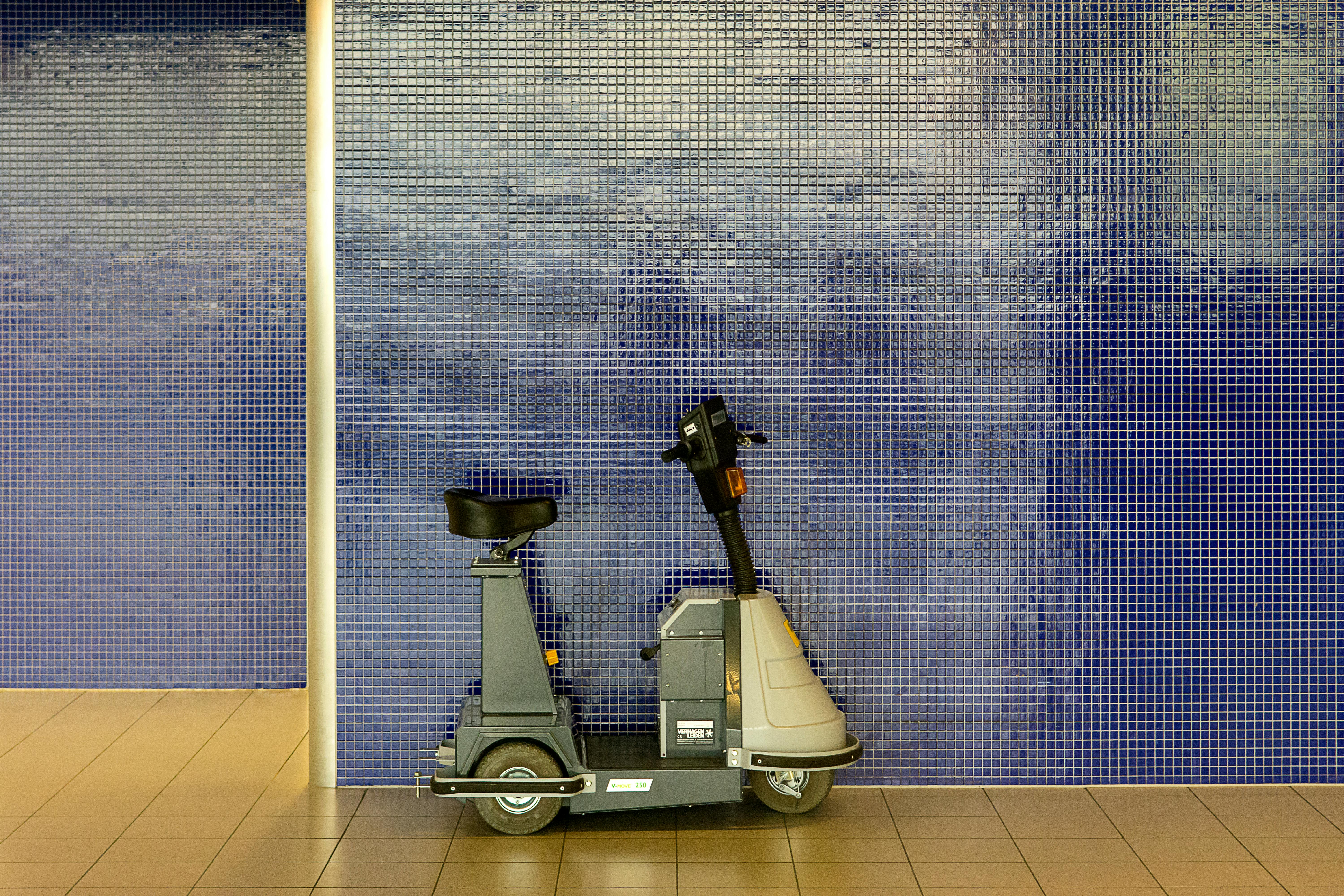
3-wheel scooters have a single front wheel, giving them a tighter turning radius. This makes them easier to maneuver in narrow store aisles, tight hallways, and cluttered spaces. However, the single front wheel provides less lateral stability, especially on uneven ground or slopes.
4-wheel scooters offer a wider wheelbase and greater stability on varied terrain, inclines, and uneven surfaces. They feel more planted and secure at higher speeds. The tradeoff is a wider turning radius, which makes tight indoor spaces more challenging.
The general rule: If you will primarily use the scooter indoors or in tightly spaced environments, choose 3 wheels. If outdoor use on sidewalks, paths, or rough ground is your primary need, choose 4 wheels. If you need both, a 4-wheel model is the safer all-around choice.
Key Features to Compare
When narrowing your options, these specifications will help you find the best match.
Battery Range
Manufacturer-stated range is measured under ideal conditions (flat surface, moderate speed, light rider). Real-world range is typically 70 to 80 percent of the stated figure. If a scooter advertises 15 miles of range, expect 10 to 12 miles in practice.
Factors that reduce range: heavier rider weight, hilly terrain, cold weather (10 to 20 percent reduction), higher speed settings, soft ground (grass, gravel), and battery age.
Tip: Choose a scooter with at least 30 percent more range than you think you need. Running out of battery away from home is not just inconvenient, it can be genuinely dangerous.
Weight Capacity
Always choose a scooter rated at least 50 pounds above your body weight. This gives the motor, frame, and suspension adequate margin for comfortable performance and longevity. Riding at or near the maximum capacity accelerates wear on the motor, batteries, and tires.
Speed
Most scooters offer top speeds between 4 and 8 mph. For reference, average walking speed is about 3 mph. A 4 mph scooter is fine for indoor use and casual outings. If you plan to cover longer outdoor distances or keep pace with walking companions, a 5 to 6 mph model is more practical.
Turning Radius
The turning radius determines how tightly the scooter can turn in a circle. Smaller numbers are better for indoor maneuverability. Travel and 3-wheel scooters typically offer turning radii of 30 to 40 inches, while full-size 4-wheel models may need 50 to 60 inches.
Measure the width of your hallways and the tightest space you need to navigate. If the space is less than twice the turning radius, the scooter will not make a U-turn there.
Portability and Transport
Think about how the scooter will get to wherever you need it. If you drive a sedan, a full-size scooter will not fit in the trunk. If you lack the strength to lift 30-pound pieces, you need either a very lightweight model or a vehicle lift.
Disassembly: Most travel and mid-size scooters break into pieces. Check the weight of the heaviest individual piece, not just the total weight.
Folding: Some newer models fold with a single motion rather than disassembling. This is faster but often results in a larger single package.
Vehicle lifts: External lifts (hitch-mounted or roof-mounted) or internal ramp systems can accommodate any scooter size. These cost $300 to $2,000 but eliminate the physical challenge of loading.
Comfort Features
If you will spend more than 30 minutes at a time on the scooter, comfort features matter more than spec sheets suggest:
- Adjustable seat: Height, position, and rotation options help you find the right fit.
- Armrests: Padded, adjustable armrests reduce fatigue on longer rides.
- Suspension: Full suspension absorbs bumps and reduces jarring on rough surfaces.
- Tiller adjustment: A tiller that adjusts for angle and reach accommodates different body sizes and seating positions.
- Legroom: Make sure there is enough space between the seat and the tiller for comfortable knee positioning.
Test Driving a Mobility Scooter
Never buy a scooter without trying it first if at all possible. A test drive reveals comfort, handling, and fit issues that specifications alone cannot.
What to Check During a Test Drive
- Ease of getting on and off. Can you mount and dismount without assistance? Is the seat the right height?
- Tiller reach and comfort. Can you comfortably reach the controls without leaning forward or stretching?
- Brake response. Do the brakes feel responsive and smooth? Can you stop comfortably at full speed?
- Turning and maneuverability. Try navigating tight spaces, making U-turns, and navigating around obstacles.
- Comfort after 10 to 15 minutes. Sit on the scooter for at least 10 minutes. Initial comfort does not always indicate long-term comfort.
- Outdoor handling. If possible, test on a sidewalk, a slope, and a slightly uneven surface.
Where to Test Drive
- DME (durable medical equipment) dealers: Most dealers have showroom models available for testing.
- Medical supply stores: Some larger stores have demo models.
- Manufacturer demo events: Major brands occasionally hold events at senior centers and community locations.
- Home demos: Some dealers will bring a scooter to your home for a trial, which is the best way to test in your actual environment.
What to Ask the Dealer
Before purchasing, get clear answers to these questions:
- What is the warranty coverage and duration? (Look for at least 1 year on the frame and motor, with battery coverage of 6 to 12 months.)
- Who handles warranty repairs, and how long do they typically take?
- Do you offer a trial or return period?
- Can you help me with Medicare or insurance paperwork?
- What is included in the purchase price? (Batteries, charger, basket, and assembly should all be included.)
- What does routine maintenance involve, and how often is it needed?
Medicare and Insurance Coverage
Medicare Part B covers mobility scooters as durable medical equipment (DME) when a doctor certifies that you need one for use inside your home. This is a critical detail: Medicare’s standard is home use, not outdoor mobility.
To qualify, your doctor must document that you have a mobility limitation that significantly impairs your ability to perform daily activities in your home, and that a scooter is the most appropriate solution (rather than a cane, walker, or manual wheelchair).
Medicare typically pays 80 percent of the approved amount after your annual Part B deductible. You pay the remaining 20 percent. You must purchase or rent from a Medicare-approved DME supplier.
For a detailed walkthrough of the Medicare process, eligibility requirements, and appeal options, see our complete guide on whether Medicare covers mobility scooters.
Medicare Advantage plans may offer additional coverage beyond original Medicare. Some plans have lower copays, cover additional accessories, or include benefits like scooter maintenance. Check your specific plan’s evidence of coverage.
Battery Types and Maintenance
Understanding battery basics will help you maintain range and avoid unexpected problems.
Sealed lead-acid (SLA) batteries are the most common. They are affordable, widely available, and typically last 12 to 18 months with regular use. SLA batteries take 8 to 12 hours to fully charge and should be charged after every use, even for short trips. Never store SLA batteries in a fully discharged state.
Lithium-ion batteries are lighter (often 50 to 70 percent lighter than SLA equivalents), charge faster (3 to 5 hours), and last longer (2 to 4 years). They are also significantly more expensive. Lithium-ion batteries are standard on most folding and premium travel scooters.
General battery tips:
- Charge after every use, regardless of how far you traveled
- Store the scooter in a climate-controlled space when possible (extreme heat and cold reduce battery life)
- Replace batteries at the first sign of significant range reduction
- Always use the charger provided by the manufacturer
Common Mistakes to Avoid
Buying online without testing. Specifications do not tell you how a scooter feels. A 15-minute test drive is worth more than hours of online research.
Choosing the cheapest option. Budget scooters often have poor seats, weak motors, and limited battery life. A mid-range scooter from a reputable brand will serve you better and last longer.
Ignoring transport logistics. If you cannot get the scooter to where you need it, it does not matter how good it is. Plan your transport solution before purchasing.
Underestimating range needs. Always overestimate how much range you need. Battery performance degrades over time, and running out of power away from home is a serious safety concern.
Skipping the doctor’s visit. Even if you are paying out of pocket, a physician’s evaluation can identify the right type of scooter for your specific condition. And if your needs change later, having a prescription on file makes insurance claims much easier.
FAQ
How fast do mobility scooters go?
Most mobility scooters have top speeds between 4 and 8 mph. Travel scooters typically max out at 4 to 5 mph, while full-size models can reach 6 to 8 mph. For perspective, the average walking speed is about 3 mph. Higher speeds are more useful for outdoor distances, while indoor use rarely requires more than 3 to 4 mph.
Can I use a mobility scooter indoors?
Yes, but size matters. Travel scooters and 3-wheel models are the best choices for indoor use due to their smaller footprint and tighter turning radius. Full-size scooters are generally too large for most home interiors. Measure your hallways, doorways, and the spaces you need to navigate before choosing.
How long do mobility scooter batteries last per charge?
Most scooters offer 8 to 25 miles per charge, depending on the model and battery type. Real-world range is typically 70 to 80 percent of the manufacturer’s stated range due to factors like rider weight, terrain, speed, and temperature. Always charge the battery fully after each use.
Do I need a license to drive a mobility scooter?
In the United States, mobility scooters are classified as medical devices, not motor vehicles. You do not need a driver’s license, registration, or insurance to operate one on sidewalks and pedestrian paths. Rules vary for road use, so check your local regulations if you plan to drive on streets.
How much does a good mobility scooter cost?
Travel scooters range from $600 to $1,500. Mid-size models run $1,000 to $2,500. Full-size scooters cost $1,500 to $4,000. Heavy-duty and all-terrain models can exceed $5,000. Medicare Part B may cover a significant portion of the cost when prescribed by your doctor.
Can I take a mobility scooter on an airplane?
Most airlines accommodate mobility scooters, but there are requirements. The scooter must have a sealed or removable battery (lithium-ion batteries under 300 watt-hours are typically accepted). Airlines will gate-check the scooter and store it in the cargo area. Call your airline at least 48 hours before your flight to arrange accommodations. For more details, see our guide on traveling with mobility scooters.
The MobilityLane Team
Written by a caregiver with 18+ years of experience supporting family members with chronic illness and mobility challenges, and medical training in mobility recovery. We research and write about mobility solutions to help people maintain independence and quality of life.
Learn more about us →Stay Independent, Stay Informed
Get our weekly guide to mobility solutions, funding tips, and home safety resources delivered to your inbox.
Thank you! Check your inbox to confirm your subscription.
Something went wrong. Please try again.
Join 1,000+ caregivers and families. Unsubscribe anytime.
Related Guides
Travel Mobility Scooters: Best Folding Models for Flying
The best travel mobility scooters for airline flights in 2026. Compare 6 folding models with battery specs, weights, and...

Does Medicare Cover Mobility Scooters? (2026 Guide)
Learn if Medicare covers mobility scooters, what the requirements are, how much you will pay, and how to get your claim ...

Power Wheelchair vs Mobility Scooter: Key Differences Explained
Compare power wheelchairs and mobility scooters side by side. Learn the differences in maneuverability, seating, Medicar...