Table of Contents
Key Takeaways
- A new straight stairlift costs $2,000 to $5,000 installed, while curved models range from $8,000 to $15,000 or more
- Staircase shape is the biggest price factor because curved rails must be custom manufactured for your home
- Refurbished stairlifts can save 30% to 50% compared to new, and rental programs start around $100 to $200 per month
- Medicare does not cover stairlifts, but Medicaid waivers, VA benefits, and nonprofit grants may help with funding
- Annual maintenance costs run $100 to $300, and most units last 10 to 15 years with proper care
Why Stairlifts Are Worth the Investment
For many seniors and people with mobility challenges, stairs become the single biggest barrier to staying in their own home. A stairlift transforms a dangerous obstacle into a safe ride between floors. Compared to moving to a single-story home or an assisted living facility (averaging $4,500+ per month), a stairlift is a one-time investment that pays for itself quickly.
Costs vary widely depending on your staircase, features, and whether you buy new, refurbished, or rent. This guide breaks down every cost factor so you can budget accurately. If you are also exploring other modifications, our home accessibility checklist covers every room.
Straight Stairlift Costs
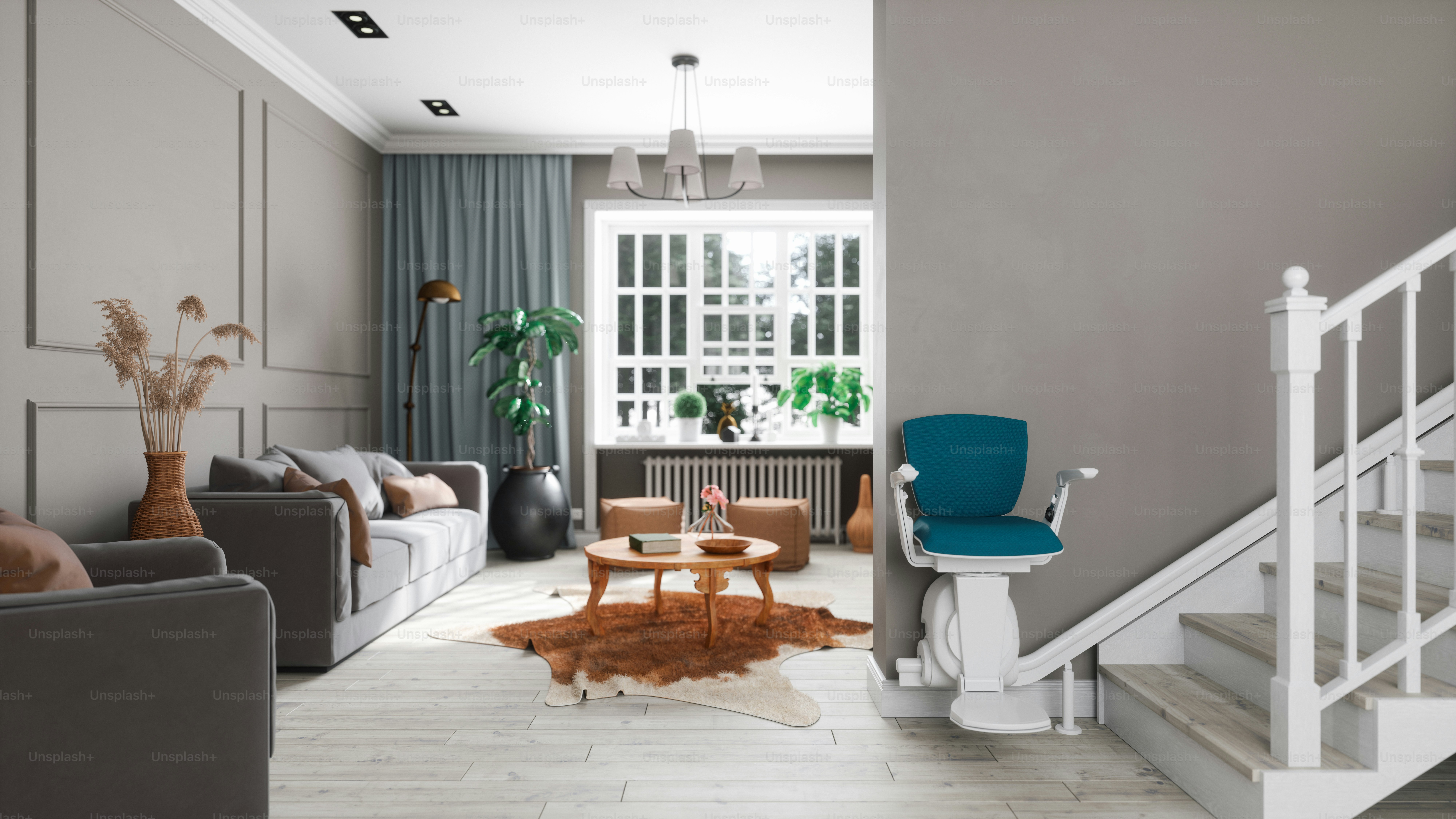
Straight stairlifts are designed for staircases that go from one floor to another in a single, uninterrupted line with no curves, landings, or turns. Because the rail is a standard straight track, manufacturers can produce them in bulk and simply cut the rail to fit your staircase length.
Typical price range: $2,000 to $5,000 installed
Here is what you can expect at different price points:
Budget range ($2,000 to $3,000): Basic models with a manual swivel seat, a seatbelt, and standard weight capacity (250 to 300 lbs). These units are reliable and functional but may lack premium comfort features. This range also includes many refurbished options.
Mid-range ($3,000 to $4,000): Models with powered swivel seats, folding rails at the top or bottom of the staircase, a slightly higher weight capacity (300 to 350 lbs), and smoother ride quality. Most families find the best value in this range.
Premium range ($4,000 to $5,000): Top-tier features like powered footrests, adjustable seat heights, slim profiles for narrow staircases, higher weight capacity (up to 400 lbs), and advanced safety sensors. Some models in this range include battery backup systems that operate during power outages.
The length of your staircase affects the price because longer runs require more rail material. A standard single-story staircase (12 to 14 steps) falls squarely in the typical range. Unusually long or short staircases may shift the price slightly.
Curved Stairlift Costs
Curved stairlifts are engineered for staircases that include turns, intermediate landings, spiral sections, or any deviation from a straight line. Every curved rail must be custom manufactured to match the exact dimensions of your staircase, which is why these units cost significantly more.
Typical price range: $8,000 to $15,000+ installed
Several factors push curved stairlift pricing higher:
Custom rail fabrication: A technician takes precise measurements of your staircase (often using laser mapping). The rail is then manufactured to fit, a process that typically takes 4 to 8 weeks.
Number of curves and landings: Each turn or landing adds complexity and cost. A single 90-degree turn costs less than two turns with an intermediate landing.
Rail length: Longer curved track runs increase material and manufacturing costs proportionally.
For homes with particularly complex staircases (spiral, multiple landings, very steep angles), prices can exceed $15,000. Get quotes from at least three providers to compare solutions.
Outdoor Stairlift Costs
Outdoor stairlifts are built to handle weather exposure, including rain, snow, humidity, and temperature extremes. They use weather-resistant materials, sealed electrical components, and corrosion-proof rails.
Typical price range: $3,000 to $7,000 installed
Outdoor models cost more than indoor straight stairlifts because of the additional weatherproofing. The price depends on:
- Staircase configuration: Straight outdoor runs cost less than those with curves
- Exposure level: Units in harsh climates may need additional protective covers and more frequent maintenance
- Length: Outdoor staircases leading to elevated porches or multi-level decks can be quite long
Most outdoor stairlifts come with a weather cover that protects the seat, controls, and rail when not in use. Some models include a key lock to prevent unauthorized use.
Factors That Affect Stairlift Price
Beyond the basic type (straight, curved, outdoor), several factors influence your total cost:
Weight Capacity
Standard stairlifts support 250 to 300 lbs. Heavy-duty models rated for 350 to 600 lbs cost 15% to 40% more due to reinforced frames, stronger motors, and wider seats. If you need a higher weight capacity, our guide to bariatric mobility equipment covers heavy-duty options across multiple product categories.
Rail Length and Customization
Longer rails require more material. Custom modifications like folding rails (which fold the bottom section of the track out of the way so it does not block a hallway or doorway) add $200 to $500 to the total.
Seat and Comfort Features
Powered swivel seats, adjustable seat heights, padded armrests, and ergonomic seat designs increase the price by $200 to $800 depending on the combination of features.
Safety Features
Basic models include a seatbelt and obstruction sensors. Premium safety packages add features like retractable seatbelts, speed governors, emergency stop buttons, and battery backup systems. These typically add $100 to $400.
Home Modifications
Some installations require minor home modifications. Common examples include widening a doorway near the stairlift, adding an electrical outlet at the top or bottom of the stairs, or reinforcing the wall where the rail mounts. These modifications usually add $100 to $500 but can cost more in older homes with non-standard construction.
New vs. Refurbished vs. Rental
Buying New
A new stairlift comes with a full manufacturer warranty (typically 2 to 5 years on parts, 1 to 2 years on labor). You get the latest features, a rail cut exactly to your staircase, and the longest expected lifespan (10 to 15 years).
Buying Refurbished
Refurbished stairlifts feature a previously used chair mounted on a new rail cut to fit your staircase. The chair is inspected, serviced, and restored to working condition. Refurbished units typically cost 30% to 50% less than new models.
Typical refurbished pricing:
- Straight: $1,500 to $3,000 installed
- Curved: $5,000 to $10,000 installed (less common due to custom rail requirements)
Refurbished stairlifts usually come with a shorter warranty (1 to 2 years). They are a smart choice when budget is the primary concern and the staircase is a standard straight configuration.
Important note: Curved stairlifts are rarely available refurbished because the rail is custom-made for a specific staircase. A used curved rail almost never fits a different home.
Renting
Rental programs allow you to install a stairlift for a monthly fee rather than a large upfront purchase. This option is ideal for temporary needs (recovering from surgery, hosting an aging parent for several months) or when you are unsure how long the stairlift will be needed.
Typical rental pricing:
- Monthly fee: $100 to $200 per month
- Installation fee: $300 to $500 (one-time)
- Removal fee: $200 to $400 (one-time)
Rental stairlifts are almost always straight models. If you need the stairlift for more than 2 to 3 years, buying (new or refurbished) is usually more cost-effective.
Installation Costs
Most stairlift prices you see advertised include standard installation. However, it helps to understand what installation involves so you can identify situations where additional costs might apply.
Standard installation includes: mounting the rail to the staircase treads, attaching the chair unit, connecting to a nearby electrical outlet, testing all functions, and demonstrating operation to the user. Standard installation takes 2 to 4 hours for straight models and 4 to 8 hours for curved models.
Additional costs may apply for:
- Adding a new electrical outlet: $150 to $300
- Minor carpentry to accommodate the rail: $100 to $400
- Removing an existing stairlift: $200 to $500
- Reinforcing stairs or mounting surfaces: $200 to $600
Always confirm whether the quoted price includes installation. Reputable dealers include standard installation in their quoted price.
Ongoing Maintenance Costs
Stairlifts are mechanical devices that benefit from regular maintenance. Most manufacturers recommend annual servicing to keep the unit running safely and extend its lifespan.
Annual maintenance service: $100 to $300
A typical service visit includes lubricating the rail, checking battery condition, testing safety sensors and brakes, inspecting the motor and gears, and tightening any loose components.
Common repair costs: battery replacement ($50 to $150), motor repair ($300 to $800), remote control replacement ($30 to $80), and seat upholstery ($100 to $250).
Many dealers offer annual maintenance contracts ($150 to $300 per year) that include service visits and discounted repair rates.
Brand and Price Comparisons
Several well-known brands manufacture stairlifts for the U.S. market. Here is a general comparison of pricing and reputation:
Acorn Stairlifts
Acorn sells directly to consumers (no dealers), which keeps costs lower but limits local service options. Straight models start around $2,500 to $4,000. Curved models start around $8,000.
Bruno Independent Living Aids
Bruno is a U.S.-based manufacturer with a wide dealer network. Their Elan (straight) runs $2,500 to $4,500, and their Elite (curved) starts around $10,000 to $14,000.
Harmar
Harmar offers competitive prices on indoor and outdoor stairlifts. Straight models range from $2,000 to $3,500. They are one of the more popular brands for outdoor installations.
Stannah
Stannah is a UK-based manufacturer known for smooth ride quality. Straight models run $3,000 to $5,000, and curved models run $9,000 to $15,000.
When comparing brands, focus on the local dealer and service network in your area. A great stairlift with no local service support is less valuable than a good stairlift backed by a responsive local dealer.
Financing and Funding Options
Stairlifts represent a significant expense, but several options can make them more affordable.
Medicare and Private Insurance
Medicare does not classify stairlifts as durable medical equipment (DME), so standard Medicare plans do not cover them. Most private health insurance policies follow the same classification. This is one of the most common misconceptions about stairlift funding.
However, some Medicare Advantage plans (Part C) offer supplemental home modification benefits that may partially cover a stairlift. Check your specific plan details or call your insurance provider to ask.
Medicaid Waivers
Many states offer Medicaid Home and Community-Based Services (HCBS) waivers that can fund home modifications, including stairlifts. Eligibility varies by state and typically requires documentation that the modification is necessary to keep the individual safely at home rather than in a nursing facility.
VA Benefits
Veterans may qualify for home modification assistance through the VA’s Home Improvements and Structural Alterations (HISA) grant program or the Specially Adapted Housing (SAH) grant. The HISA grant provides up to $6,800 for service-connected veterans. Learn more in our guide to VA benefits for mobility equipment.
Tax Deductions
If a doctor prescribes a stairlift as medically necessary, the cost may qualify as a medical expense deduction on your federal tax return. Medical expenses that exceed 7.5% of your adjusted gross income (AGI) are deductible. Keep all receipts and the doctor’s written recommendation.
Nonprofit and Community Programs
Organizations like Rebuilding Together, local Area Agencies on Aging, and community development block grant programs sometimes fund stairlift installations for qualifying low-income seniors. Availability varies widely by location, so contact your local Area Agency on Aging to ask about programs in your area.
Dealer Financing
Many stairlift dealers offer financing plans with monthly payments. Terms typically range from 12 to 60 months. Interest rates vary, so compare the total cost of financing against the upfront purchase price. Some dealers offer 0% interest promotions for shorter terms (6 to 12 months).
Tips for Getting the Best Price
-
Get at least three quotes. Pricing varies significantly between dealers, even for the same brand. In-home assessments are usually free.
-
Ask about refurbished options. If you have a straight staircase, a refurbished unit can save you thousands with minimal compromise on reliability.
-
Consider your timeline. If your need is not immediate, watch for seasonal promotions. Some dealers offer discounts during slower months (typically late winter and early spring).
-
Check the total price. Make sure quotes include installation, warranty, and any necessary home modifications. A lower sticker price with expensive add-ons can end up costing more.
-
Ask about the warranty. A longer warranty adds value, especially on a curved stairlift. Some dealers offer extended warranty options.
-
Explore all funding sources. Combining a VA benefit, a tax deduction, and dealer financing can make even a curved stairlift manageable.
For more ways to improve accessibility throughout your home, browse our guides on wheelchair ramp slope requirements and bathroom grab bar installation.
FAQ
Does Medicare cover stairlifts?
No. Medicare does not classify stairlifts as durable medical equipment, so they are not covered under standard Medicare Part B. Some Medicare Advantage plans (Part C) offer supplemental benefits for home modifications that may include partial stairlift coverage. Contact your plan provider to check your specific benefits.
How long does a stairlift last?
A well-maintained stairlift typically lasts 10 to 15 years. The lifespan depends on usage frequency, weight load, and maintenance consistency. Annual servicing helps maximize the unit’s life. Battery-powered models may need battery replacements every 2 to 3 years.
Can a stairlift be installed on any staircase?
Most staircases can accommodate a stairlift. Straight, curved, spiral, and outdoor staircases all have stairlift solutions available. Very narrow staircases (under 28 inches wide) may require a slim-profile model or minor modifications. A qualified installer will assess your staircase during a free in-home evaluation.
Is it cheaper to buy or rent a stairlift?
For long-term use (more than 2 to 3 years), buying is almost always more cost-effective. Renting makes financial sense for temporary needs, such as recovery from surgery or a short-term living arrangement. A typical rental costs $100 to $200 per month plus installation and removal fees.
How much does it cost to remove a stairlift?
Stairlift removal typically costs $200 to $500 depending on the type and installation. Straight stairlifts are the simplest and least expensive to remove. Curved models cost more because of the custom rail. Some dealers offer removal as part of a trade-in or buyback program, which can offset the cost.
Do stairlifts add value to a home?
A stairlift does not typically increase a home’s resale value in the general market. However, it can make the home more attractive to buyers who specifically need accessibility features. If you are selling your home, some dealers will remove the stairlift and repair the staircase for a reasonable fee. Alternatively, the stairlift may be a selling point for aging-in-place buyers.
The MobilityLane Team
Written by a caregiver with 18+ years of experience supporting family members with chronic illness and mobility challenges, and medical training in mobility recovery. We research and write about mobility solutions to help people maintain independence and quality of life.
Learn more about us →Stay Independent, Stay Informed
Get our weekly guide to mobility solutions, funding tips, and home safety resources delivered to your inbox.
Thank you! Check your inbox to confirm your subscription.
Something went wrong. Please try again.
Join 1,000+ caregivers and families. Unsubscribe anytime.
Related Guides
Home Accessibility Checklist: Room-by-Room Safety Guide
A comprehensive room-by-room home accessibility checklist for seniors. Covers grab bars, ramps, lighting, bathroom safet...
Wheelchair Ramp Slope Requirements: ADA Guide + Calculator
ADA wheelchair ramp slope requirements explained in plain language. Includes slope calculator, materials comparison, cos...

Best Grab Bars for Elderly: Bathroom Safety Essentials
We reviewed the 7 best grab bars for elderly bathroom safety. Covers wall-mounted, suction cup, tension pole, and fold-d...