Table of Contents
Key Takeaways
- Walkers provide maximum stability for weight-bearing support; rollators offer smoother movement with built-in seats
- Choose a walker if you need to lean heavily on the device or have limited hand strength for brakes
- Choose a rollator if you walk outdoors, need rest breaks, or want to carry items in a basket
- Many people start with a walker after surgery and transition to a rollator as they recover
- Both are covered by Medicare Part B with a doctor’s prescription
Understanding the Basics
If you or a loved one needs help with walking and balance, you have likely encountered two main options: walkers and rollators. Both provide support and stability, but they work in fundamentally different ways. Choosing the right one can make a real difference in daily comfort, confidence, and independence.
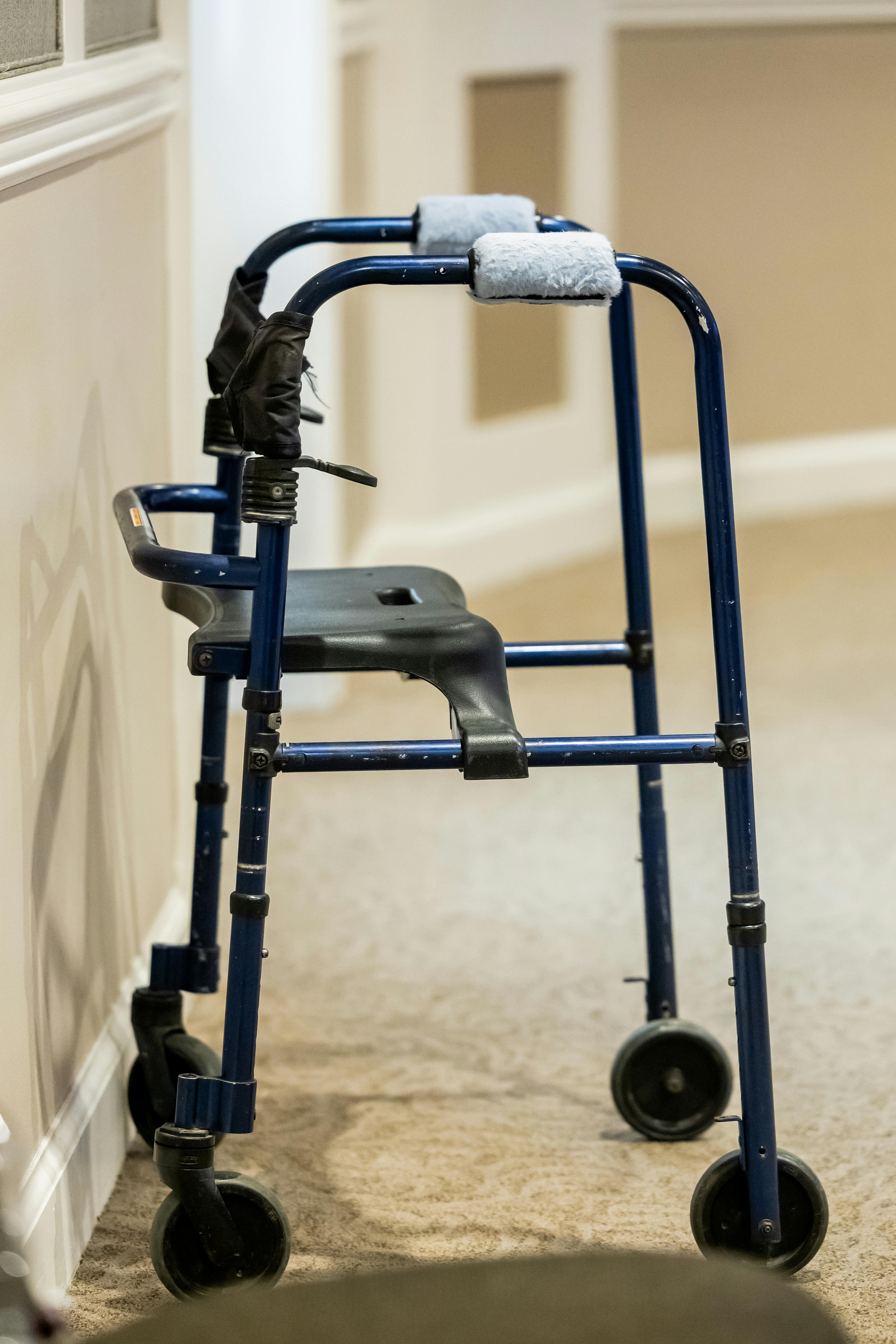
A walker (sometimes called a standard walker or pickup walker) is a lightweight metal frame with four legs and no wheels. You lift it, place it forward, and step into it. Some walkers have two small wheels on the front legs, making them easier to push without lifting completely.
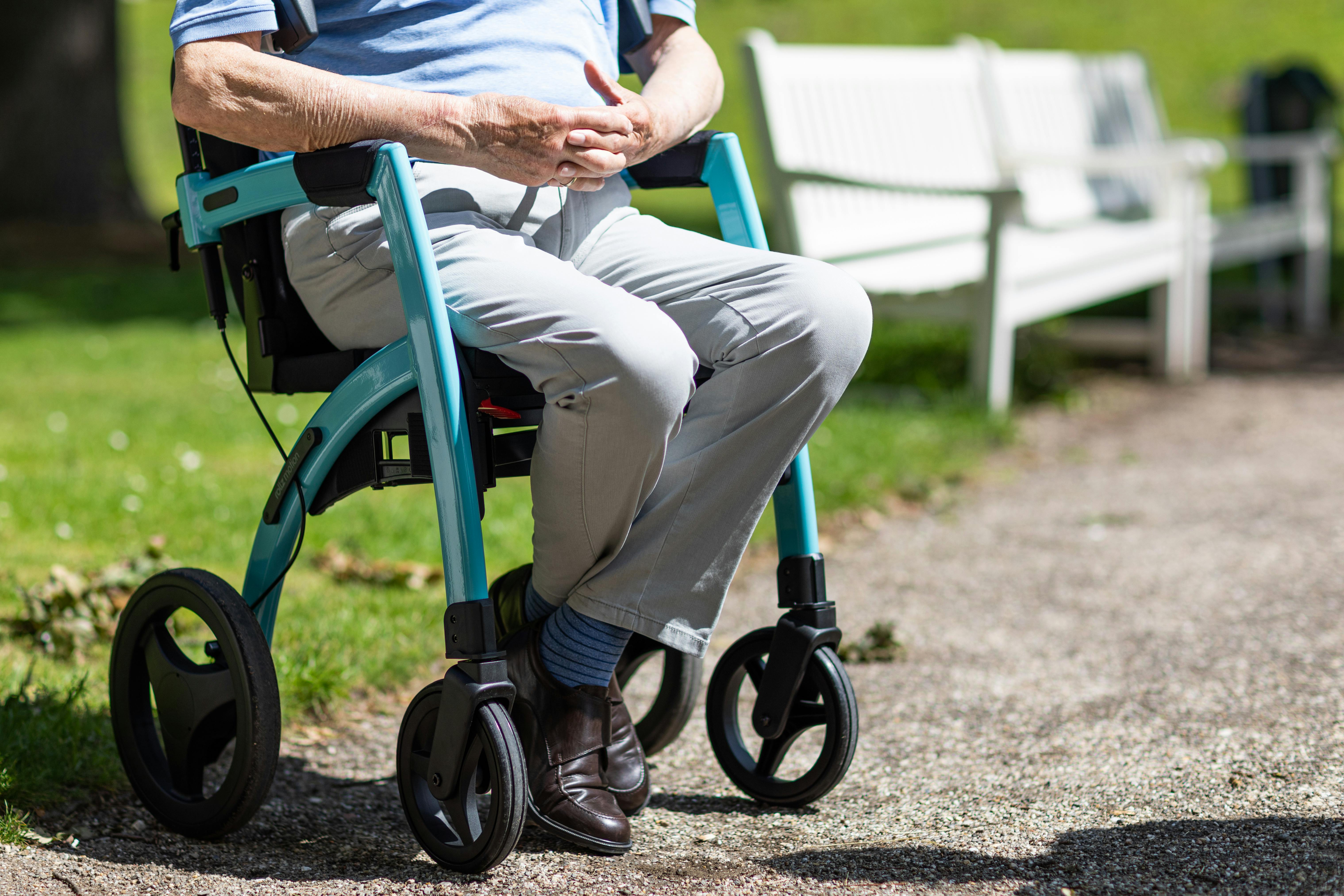
A rollator is a wheeled walker with three or four wheels, hand brakes, and usually a built-in seat with a storage basket. You push it forward continuously, squeezing the brakes when you need to slow down or stop.
Both devices help you walk more safely. The question is which one matches your specific needs, abilities, and lifestyle.
Key Differences at a Glance
Understanding the core differences between rollators and walkers will help you narrow down your choice quickly.
Wheels and Movement
Standard walkers have no wheels at all, which means you must lift the frame with each step. This makes them extremely stable but slower to use. Front-wheeled walkers (two-wheel walkers) add small wheels to the front legs, letting you push the walker forward without fully lifting it.
Rollators have three or four wheels, so they glide continuously as you walk. This creates a more natural walking rhythm and faster movement. However, the wheels also mean the device can roll away from you if you lean on it without engaging the brakes.
Brakes and Stopping
Walkers do not have brakes because they do not roll. The rubber tips on the legs grip the floor and provide friction. When you lean on a walker, it stays put.
Rollators use hand-operated loop brakes (similar to bicycle brakes) or push-down parking brakes. You squeeze the brake handles to slow down while walking and lock the brakes when you want to sit on the seat or stand still. This requires some hand strength and coordination.
Seat and Rest Stops
Most standard walkers do not include a seat. If you need to rest, you need to find a chair or bench nearby.
Most four-wheel rollators include a padded seat and a backrest, allowing you to take a break anywhere. This is a major advantage for people who tire easily or who walk longer distances. Three-wheel rollators typically do not have seats.
Weight and Portability
Standard walkers are generally lighter than rollators, often weighing between 5 and 10 pounds. They fold flat for easy storage and transport.
Rollators are heavier, typically ranging from 14 to 25 pounds depending on the model. They fold for transport, but the folded size is larger than a standard walker. Some models feature side-fold mechanisms that create a more compact package, while others cross-fold (the most common design).
Stability and Support
This is where the choice gets personal. Standard walkers offer the most stability because they do not move unless you move them. They are ideal for people who need to lean heavily on their walking aid for weight-bearing support.
Rollators provide less weight-bearing stability because they can roll. However, they offer better dynamic balance support while you are in motion. If your primary need is steady support while actively walking rather than bearing significant weight through your arms, a rollator may actually feel more stable in practice.
Who Should Choose a Walker?
A standard walker or front-wheeled walker is typically the better choice if you:
- Need significant weight-bearing support through your arms
- Have limited hand strength or coordination (since no brakes are required)
- Primarily walk indoors on flat, smooth surfaces
- Are in early recovery from surgery and need maximum stability
- Have a condition that causes sudden loss of balance (the walker will not roll away)
- Have cognitive challenges that might make brake operation confusing
- Are on a tight budget (walkers are significantly less expensive)
Standard walkers are frequently recommended by physical therapists for the first weeks after hip or knee replacement surgery, when maximum stability is critical. Many people transition to a rollator later in their recovery as strength improves.
Who Should Choose a Rollator?
A rollator is typically the better choice if you:
- Can walk with some independence but need balance support
- Walk outdoors regularly (larger wheels handle uneven surfaces better)
- Need a seat for rest breaks during walks or errands
- Want to carry items (grocery bags, a purse, water bottles) in the built-in basket
- Prefer a natural, continuous walking rhythm
- Have the hand strength to operate loop brakes
- Walk moderate to longer distances (more than just around the house)
Rollators are popular among active older adults who want to maintain their independence for shopping trips, neighborhood walks, medical appointments, and social outings. The combination of wheels, a seat, and storage makes them practical all-purpose mobility aids.
Pros and Cons Compared
Standard Walker Pros
- Maximum stability and weight-bearing support
- Very lightweight and easy to lift
- No brakes to learn or maintain
- Folds completely flat for storage
- Affordable (often under $50)
- Simple, no moving parts to break
- Covered by Medicare with a prescription
Standard Walker Cons
- Slower walking speed (lift, place, step pattern)
- No seat for resting
- No storage basket
- Less effective on uneven outdoor surfaces
- Can create an unnatural, shuffling gait pattern
- Less practical for longer distances
Rollator Pros
- Natural, smooth walking rhythm
- Built-in seat for rest breaks
- Storage basket for carrying items
- Large wheels handle outdoor terrain well
- Faster and more efficient movement
- Available in lightweight models (under 15 pounds)
- Covered by Medicare with a prescription
Rollator Cons
- Less weight-bearing stability (can roll away)
- Requires hand strength and coordination for brakes
- Heavier and bulkier than standard walkers
- More expensive ($80 to $300+)
- Brake cables may need occasional adjustment
- Wider frame may not fit through narrow doorways
A Simple Decision Framework
Still not sure which to choose? Walk through these questions:
Step 1: How much weight do you bear through your arms when walking? If you lean heavily on the device for support, start with a walker. If you mostly need balance support and a light touch, a rollator works well.
Step 2: Do you walk primarily indoors or outdoors? For indoor-only use on flat floors, a walker is fine. For outdoor use or a mix of indoor and outdoor, a rollator’s larger wheels and smoother motion are better.
Step 3: Do you need rest breaks during walks? If you tire easily and need to sit frequently, a rollator’s built-in seat is a significant advantage.
Step 4: Can you operate hand brakes? If hand strength or coordination is a concern, a walker (which requires no brakes) may be safer. Some rollators offer push-down brakes that are easier for people with limited grip strength.
Step 5: Is your condition temporary or ongoing? For short-term recovery (like post-surgery), a basic walker may be all you need. For ongoing mobility support, a rollator offers more functionality for daily life.
If you are still uncertain, ask your doctor or physical therapist. They can evaluate your specific strength, balance, and coordination to recommend the best option.
Insurance and Cost Considerations
Both walkers and rollators are classified as durable medical equipment (DME) by Medicare. When prescribed by your doctor, Medicare Part B typically covers 80% of the approved amount after you meet your annual deductible. You are responsible for the remaining 20%.
Typical price ranges:
- Standard walker (no wheels): $30 to $80
- Front-wheeled walker (two wheels): $40 to $100
- Basic rollator: $60 to $150
- Mid-range rollator: $100 to $200
- Premium/lightweight rollator: $150 to $350
When purchasing through Medicare, you must use a Medicare-approved DME supplier. Some suppliers offer a wider selection than others, so it is worth calling ahead to confirm they carry the model you want. For more details on Medicare coverage for mobility aids, see our funding and insurance guide.
Transitioning Between Devices
Many people start with one device and later switch to the other as their needs change. This is completely normal and actually a sign that you are paying attention to your body.
Walker to rollator: This is the most common transition. As surgical patients recover strength and confidence, they often graduate from a walker to a rollator. The key indicator is when you no longer need heavy weight-bearing support through your arms and want more freedom of movement.
Rollator to walker: Less common but it happens. If a condition progresses and balance becomes more challenging, stepping back to a walker for its added stability is a smart, safe decision. There is no shame in choosing the device that keeps you safe.
Using both: Some people keep both devices and use them for different situations. A walker for the bathroom (where wet floors make wheel traction unreliable) and a rollator for everything else is a practical combination.
When neither is enough: If falls are happening while a walker or rollator is actually in use, the issue is no longer which of the two to choose. That is the point at which wheeled mobility enters the conversation. See when a walker is no longer safe for the warning signs and what comes next.
Tips for Getting the Right Fit
Regardless of which device you choose, proper fit matters. A device that is too tall or too short forces you into awkward postures that cause back pain, shoulder strain, and reduced stability.
For walkers: Stand inside the walker with your arms relaxed at your sides. The top of the walker should align with the crease of your wrist. When you grip the handles, your elbows should bend at about a 15 to 20 degree angle.
For rollators: The handle height adjustment works the same way. Stand behind the rollator and adjust the handles so they are at wrist height. Your elbows should have a comfortable, slight bend when gripping the handles. The seat height should allow your feet to rest flat on the ground when you sit down.
Most walkers and rollators have adjustable handle heights. If you are between sizes or find that no standard model feels right, ask your physical therapist about custom fitting options.
When to Talk to Your Doctor
While this guide can help you understand your options, your doctor or physical therapist should be part of the decision. Specifically, consult a healthcare professional if:
- Your mobility has changed noticeably in recent weeks
- You have fallen or had a near-fall recently
- You are recovering from surgery or an injury
- You have a neurological condition (like Parkinson’s or MS) that affects your gait
- You are unsure whether you need a walking aid at all
A physical therapy evaluation can identify your specific balance and strength needs and match you with the right device. Many insurance plans cover this evaluation, and it can save you from purchasing the wrong equipment.
FAQ
Can I use a rollator if I have poor balance?
Yes, but it depends on the nature of your balance issues. Rollators provide good dynamic balance support while walking. However, if you experience sudden, unpredictable balance loss (like drop attacks or severe vertigo), a standard walker may be safer because it will not roll away when you lean on it heavily. Ask your physical therapist for a personalized assessment.
Are rollators safe for people with Parkinson’s disease?
Standard rollators can actually be problematic for people with Parkinson’s because the rollator can roll faster than the person can keep up, especially during festinating (involuntary accelerating) episodes. Specialized walkers designed for Parkinson’s, such as the U-Step or laser-cue walkers, are generally safer. Consult your neurologist or PT before choosing.
How wide are rollators compared to walkers?
Most standard rollators are 22 to 24 inches wide, while standard walkers are about 21 to 25 inches wide. The key concern is doorway clearance. Standard interior doorways are 28 to 32 inches wide, which accommodates most models. Measure your narrowest doorway before purchasing.
Can I take a rollator on an airplane?
Yes, most airlines allow rollators as a mobility device. They will gate-check it for free at the jet bridge and return it when you deplane. Lightweight, folding rollators are easiest for air travel. Call your airline ahead of time to confirm their specific policies.
How long do walkers and rollators last?
A quality walker can last 5 to 10 years with minimal maintenance since there are few moving parts. Rollators typically last 3 to 7 years depending on usage and conditions. Brake cables, wheels, and hand grips are the most common components that wear out and may need replacement.
Should I buy or rent a walker or rollator?
If you need the device for a short-term recovery (a few weeks to a few months), renting may be more cost-effective. For ongoing, long-term use, purchasing is almost always cheaper. Medicare covers purchases, not rentals, for most walking aids. Check with your DME supplier about both options.
The MobilityLane Team
Written by a caregiver with 18+ years of experience supporting family members with chronic illness and mobility challenges, and medical training in mobility recovery. We research and write about mobility solutions to help people maintain independence and quality of life.
Learn more about us →Stay Independent, Stay Informed
Get our weekly guide to mobility solutions, funding tips, and home safety resources delivered to your inbox.
Thank you! Check your inbox to confirm your subscription.
Something went wrong. Please try again.
Join 1,000+ caregivers and families. Unsubscribe anytime.
Related Guides

Best Lightweight Rollators for Seniors: Top 7 Reviewed
We reviewed the 7 best lightweight rollators for seniors in 2026. Compare weights, features, prices, and find the right ...

Best Walking Canes for Balance Problems: Expert Picks
We reviewed the 7 best walking canes for balance problems. Compare single-point, offset, quad, folding, and seat canes w...
Best Mobility Aids After Hip Replacement Surgery
A recovery timeline guide to the best mobility aids after hip replacement surgery. Covers walkers, canes, raised toilet ...