Table of Contents
Key Takeaways
- Falling while using a walker is the clearest signal that the walker is no longer doing its job. One fall is worth investigating. Two is a pattern.
- Before assuming the device is wrong, rule out the fixable causes: poor fit, worn parts, new medications, blood pressure drops on standing, and vision changes.
- Leaning on the walker rather than walking inside it means the device is being used as a support rail, not a walking aid, and it will eventually tip or roll away.
- The transition is rarely all or nothing. Many people keep a walker for short indoor distances and add a wheelchair or power chair for everything else.
- The same observations that tell you the walker has failed are exactly what Medicare needs documented to approve a wheelchair.
The Signal That Matters Most
A walker that is working keeps someone upright. A walker that is not working is a thing they hold onto while they fall.
If someone is falling while using their walker, the walker has stopped being sufficient. That is the whole finding. It does not mean they used it wrong or need to try harder. It means the level of support the device provides no longer matches the level of support they need.
Families tend to interpret falls as user error and respond by giving reminders. Use the walker. Slow down. Do not let go. Those reminders do not change the underlying problem, and the intervening months usually include more falls.
Signs the Walker Has Stopped Working
Falls and near-falls
Any fall while actively using the walker counts. So do the ones that did not quite happen: the stumble caught on a counter, the sit-down-hard on the edge of the bed, the slide down the wall. People underreport these, especially to adult children, because they are afraid of losing independence. Ask specifically and ask more than once.
Leaning instead of walking
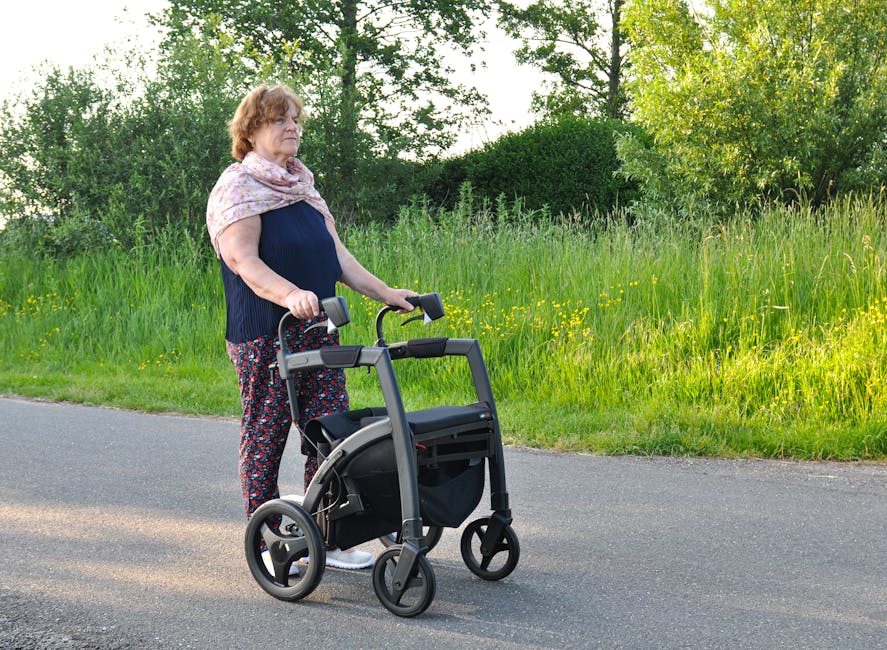
Watch the posture. A walker is meant to be used with the person standing inside the frame, upright, arms slightly bent. When someone is bent forward with their weight hanging on the handles, arms locked, the walker has become a support rail. That posture is unstable. It shifts the center of gravity forward of the wheels, and a rollator in that configuration will roll out from under them.
The walker moving when it should not
A standard walker that gets pushed rather than lifted and placed. A rollator that rolls away on a slope or a smooth floor. Brakes that get forgotten during transfers. Any of these mean the device is moving independently of the person’s control.
Freezing, festination, or shuffling
Feet that stop responding mid-step while the walker keeps going forward is a specific and dangerous mismatch. It is common in Parkinson’s disease and in some forms of vascular dementia. Our guide to mobility equipment for Parkinson’s covers devices designed for this pattern, including walkers with laser cue lines and reverse-braking mechanisms.
Distance and endurance collapse
Track how far she can go before she needs to stop. If she is resting partway down her own hallway, or if trips to the bathroom have become something to plan for rather than something to do, the functional radius has shrunk below the size of the house.
Avoidance behavior
This one is easy to miss because it looks like preference rather than decline. Skipping meals to avoid the walk to the kitchen. Limiting fluids to avoid trips to the bathroom. Sleeping in a recliner to avoid the bedroom. Declining invitations that involve walking. When someone is reorganizing their life around not moving, mobility has already failed, and the health consequences of that reorganization tend to be worse than the fall risk.
Physical marks
Bruising on the forearms and palms from bearing weight through the handles. Wrist or shoulder pain that started after the walker did. Sore hands. These indicate the arms are carrying load the legs cannot.
The caregiver is doing more of the work
If someone is walking alongside with a hand on her belt or under her arm, the walker is no longer the primary support. A person is. That is not a sustainable arrangement, and it puts the caregiver at risk of injury too.
Rule Out the Fixable Causes First
Not every decline in walker safety is a decline in the person. Check these before concluding the device needs to change.
Fit. A walker set at the wrong height forces bad posture and undermines balance. With arms hanging relaxed at the sides, the handles should sit at wrist crease height, producing about a fifteen to twenty degree bend at the elbow when in use. Walkers get readjusted, borrowed, or handed down and end up at somebody else’s setting. Our guide to sizing and fitting a walker covers this properly.
Worn parts. Rubber tips that have gone slick. Wheels that stick or wobble. Brake cables that have stretched so the brakes no longer hold. These are inexpensive and quick to replace and they change stability immediately.
The wrong type of walker. A standard pickup walker requires lifting it with each step, which takes upper body strength and standing balance. Someone who has lost either may do better with a two-wheeled walker or a rollator. Someone with poor braking judgment may do worse with a rollator. Rollator vs. walker covers the tradeoff.
Medications. New prescriptions, dose changes, and drug interactions are a leading and reversible cause of falls in older adults. Sedatives, blood pressure medications, sleep aids, and some antidepressants are frequent culprits. Ask the prescriber or a pharmacist for a full medication review.
Blood pressure drops on standing. If she is dizzy or lightheaded in the first moments after standing up, orthostatic hypotension may be the mechanism rather than leg weakness. It is measurable in a clinic and often treatable.
Vision. New or worsening cataracts, macular degeneration, or an outdated prescription change how people judge floor edges and thresholds. So do multifocal lenses on stairs.
The home. Throw rugs, thresholds, cords, poor lighting, and low seat heights all contribute. Our caregiver’s guide to preventing falls at home has a room-by-room walkthrough, and the home accessibility checklist covers structural fixes.
Work through all of that before spending money on equipment. Sometimes the walker is fine and the problem is a new blood pressure pill.
Get a Professional Assessment
The right next step is a physical therapy evaluation, ordered by the treating physician. A therapist will measure gait speed, standing balance, transfer ability, and endurance, and will trial different devices to see what actually works. That is a different quality of answer than a family guess, and it produces the objective documentation that any funding request will need.
Ask the physician for a referral for a mobility and fall risk evaluation. Bring your fall history to the appointment.
What Comes After a Walker
The transition is usually partial rather than total. Most people keep walking short distances with a walker and add wheeled mobility for longer ones, which preserves the strength and bone density that walking provides while removing the situations where falls happen.
| Option | Best when |
|---|---|
| Rollator with a seat | Endurance is the limit rather than balance. She can walk but needs to rest. |
| Transport chair | A caregiver is available to push. Short trips, appointments, outings. |
| Manual wheelchair | She has the arm strength and endurance to self-propel, or a caregiver pushes. |
| Mobility scooter | Good sitting balance and hand function, can transfer on and off independently. Mainly outdoor and community use. |
| Power wheelchair | Cannot self-propel, cannot safely operate a scooter, and needs independent mobility inside the home. |
Two practical notes. A transport chair is not a substitute for a wheelchair she can move herself in, and choosing one because it is cheaper often trades independence for cost. And a mobility scooter is generally not the answer for someone whose problem is standing balance and transfers, because getting on and off a scooter requires standing.
For the comparison in depth, see power wheelchair vs. scooter and our review of the best transport wheelchairs.
Documenting It for Insurance
Here is the part most families do not realize until they hit a denial: the observations you have been making are precisely the evidence Medicare requires.
Medicare approves a wheelchair only when the record shows that a cane or walker is insufficient for mobility-related activities of daily living inside the home. Repeated falls with a walker are among the strongest evidence there is, but only if they are in the chart. A physician’s note saying “patient reports difficulty walking” will not survive review.
Bring a written summary to the appointment. Include:
- Each fall. Date, what she was doing, whether the walker was in use, whether anyone was present, whether there was injury or an ER visit.
- Walking distance in feet before she has to stop, measured at home rather than estimated.
- Standing tolerance in minutes or seconds.
- Which activities inside the home she can no longer complete safely. Reaching the toilet, the kitchen, the bed, the shower. Name them individually.
- What has already been tried. Cane, standard walker, rollator, height adjustments, new tips, therapy. What happened with each.
- Whether she can propel a manual wheelchair with her arms, and for how far.
- Whether a caregiver lives in the home and can push a manual chair, and during which hours. Medicare weighs caregiver availability when deciding between a manual and a power chair.
Hand the summary to the doctor and ask that the specifics go into the note rather than a general statement. This one habit is the difference between an approval and a two-month appeal. Our power wheelchair application walkthrough covers the full sequence from that appointment through delivery, and appealing a denied DME claim covers the process if the first request is denied.
Staying Safe During the Gap
Getting a wheelchair approved and delivered commonly takes two to three months. Falls do not pause for paperwork. In the meantime:
- Borrow or rent interim equipment. Local equipment loan closets, Area Agencies on Aging, and rehabilitation departments often have chairs available at no cost. See free wheelchair programs and renting vs. buying mobility equipment.
- Move the most-used items to the most-used room to shorten the distances she has to cover.
- Add grab bars at the toilet and in the shower, which are the two highest-risk locations in the house.
- Raise low seating. Getting up from a low chair or couch is where many falls start.
- Consider a bedside commode overnight, when falls cluster.
- Look at a medical alert device with automatic fall detection if she spends time alone. See our guides to medical alert systems and fall detection technology.
FAQ
How many falls before we should change equipment?
There is no threshold that makes it official, but the practical answer is that one fall while using a walker warrants a medical evaluation and two within a few months means the device is not providing enough support. Falls tend to accelerate. Waiting for a serious injury before acting is common and it is the wrong order of operations. A hip fracture changes the trajectory of someone’s independence far more than switching to a wheelchair does.
Will using a wheelchair make her weaker?
Deconditioning from complete inactivity is a real concern, which is why the usual recommendation is a combination rather than a replacement: keep walking with the walker for short supervised distances, and use wheeled mobility for the longer trips where falls happen. In practice, people who are afraid of falling stop moving entirely, and that produces far more deconditioning than appropriate wheelchair use does. A physical therapist can set up a walking program alongside the new equipment.
She refuses to consider a wheelchair. What can we do?
Resistance is usually about identity and the fear of losing independence rather than about the chair. A few things help. Frame it as an addition rather than a replacement, since keeping the walker for short distances is genuinely part of the plan. Point at what the chair enables rather than what it concedes: the family gathering she has been skipping, the store she has not been to. Let a clinician deliver the recommendation, since it often lands differently coming from a therapist than from a daughter. And try a rental first, which is a smaller commitment than a purchase. Repeated falls also change the conversation on their own over time.
Can she use a walker and a wheelchair at the same time?
Yes, and it is the most common arrangement. Someone might walk with a rollator from the bedroom to the bathroom and use a wheelchair for anything longer or anything outside the house. Insurance handles this awkwardly, because Medicare will generally not fund two devices meeting the same need in the same period. If the walker is already owned, that is usually not an obstacle. If both need to be funded, discuss the sequence with the supplier before ordering.
Does Medicare cover a wheelchair just because she keeps falling?
Falls are strong supporting evidence but they are not the criterion by themselves. Medicare’s test is whether she can complete mobility-related activities of daily living inside the home, and whether a cane or walker is sufficient for that. Falls with a walker demonstrate insufficiency, which is exactly why they need to appear in the medical record with dates and detail. Falls that only happen outside the home carry less weight in the decision, which frustrates people but reflects how the benefit is written.
The MobilityLane Team
Written by a caregiver with 18+ years of experience supporting family members with chronic illness and mobility challenges, and medical training in mobility recovery. We research and write about mobility solutions to help people maintain independence and quality of life.
Learn more about us →Stay Independent, Stay Informed
Get our weekly guide to mobility solutions, funding tips, and home safety resources delivered to your inbox.
Thank you! Check your inbox to confirm your subscription.
Something went wrong. Please try again.
Join 1,000+ caregivers and families. Unsubscribe anytime.
Related Guides

Rollator vs Walker: Which Mobility Aid Is Right for You?
Compare rollators and walkers side by side. Learn the key differences in wheels, brakes, seats, and stability to find th...
How to Size and Fit a Walker: Step-by-Step Guide
Learn how to properly size a standard walker for comfort and safety. Covers height adjustment, handle positioning, arm a...

Caregiver's Guide to Preventing Falls at Home
Evidence-based fall prevention strategies for caregivers. Covers risk factors, room-by-room hazard checks, exercises, me...