
Table of Contents
Key Takeaways
- One in four adults over 65 falls each year, but most falls are preventable
- Exercise targeting balance and strength (Tai Chi, Otago program) reduces falls by 20-35%
- Medication review is one of the highest-impact interventions, especially with 4+ prescriptions
- Bathroom grab bars and stair handrails address the two highest-risk locations in the home
- Every fall should be reported to the person’s doctor, even without apparent injury
The Reality of Falls for Older Adults
Falls are not a normal part of aging, but they are alarmingly common. The Centers for Disease Control and Prevention reports that one in four adults aged 65 and older falls each year. That works out to roughly 14 million older Americans experiencing a fall annually. Of those falls, about 3 million result in emergency department visits, and over 800,000 lead to hospitalizations, most commonly for head injuries and hip fractures.
For caregivers, these numbers are not abstract statistics. They represent real fear: the phone call you dread, the worry every time your parent gets up at night, the constant mental inventory of hazards in their home. The emotional weight of fall prevention is heavy, and it is something that most caregiver resources do not adequately address.
Here is what the research consistently shows: most falls are preventable. They are caused by identifiable risk factors, and those risk factors can be addressed with practical, affordable interventions. This guide gives you a systematic approach to reducing fall risk for the person you care for, starting with the most impactful steps.
Understanding Fall Risk Factors
Falls rarely have a single cause. They result from a combination of factors that interact to overwhelm a person’s ability to maintain balance. Understanding these factors helps you target your prevention efforts where they will have the most impact.
Physical Risk Factors
Muscle weakness. Age-related muscle loss (sarcopenia) reduces the strength needed to recover from a stumble or maintain balance on uneven surfaces. Lower body weakness is the single strongest physical predictor of fall risk.
Balance and gait problems. Changes in walking pattern, reduced reaction time, and impaired proprioception (the body’s sense of its own position in space) all contribute to instability. If the person you care for has started shuffling, taking shorter steps, or walking with a wider stance, these are signs that balance is declining.
Chronic conditions. Arthritis, diabetes, stroke, Parkinson’s disease, peripheral neuropathy, and heart conditions all affect balance and mobility in different ways. Managing the underlying condition is an important part of fall prevention. People with diabetic neuropathy or dementia face especially elevated fall risk and benefit from targeted equipment strategies.
Foot problems. Bunions, hammertoes, neuropathy, and poorly fitting shoes directly affect stability. Foot problems are one of the most overlooked fall risk factors.
Vision changes. Reduced depth perception, peripheral vision loss, cataracts, glaucoma, and macular degeneration all impair the visual information the brain uses to maintain balance. Bifocal and progressive lenses can also contribute to falls by distorting the perception of floor surfaces and step edges.
Medication-Related Risk Factors
Medications are involved in a significant percentage of falls among older adults. The following drug categories carry the highest fall risk:
- Sedatives and sleep aids (benzodiazepines, Z-drugs like zolpidem)
- Antidepressants (SSRIs, tricyclics)
- Blood pressure medications (especially those causing orthostatic hypotension)
- Opioid pain medications
- Antihistamines (particularly first-generation like diphenhydramine)
- Anti-anxiety medications
The risk increases with polypharmacy (taking multiple medications). Each additional medication adds to the cumulative side effect burden. If the person you care for takes four or more prescription medications, a medication review with their doctor or pharmacist is one of the most impactful fall prevention steps you can take.
Environmental Risk Factors
The home environment is where the majority of falls occur. Common hazards include:
- Throw rugs and loose carpet edges
- Cluttered walkways and hallways
- Poor lighting (especially in stairways, bathrooms, and hallways)
- Wet or slippery floors (bathroom, kitchen, entryway)
- Lack of grab bars in the bathroom
- Missing or loose handrails on stairs
- Electrical cords crossing walking paths
- Uneven thresholds between rooms
- Low toilet height
- Unstable furniture used for balance support
For a detailed room-by-room assessment with specific modifications and cost estimates, see our complete home accessibility checklist.
Room-by-Room Hazard Assessment
Walk through the home with fresh eyes. It helps to do this assessment methodically, room by room, rather than trying to identify everything at once. Bring a notepad and write down every hazard you notice, no matter how small.
Bathroom
The bathroom is the highest-risk room in the home. Wet surfaces, hard edges, and the physical demands of bathing and toileting create a uniquely dangerous combination.
Check for:
- Grab bars near the toilet (both sides if possible)
- Grab bars inside the shower or tub (at standing height and lower for seated support)
- Non-slip mat or adhesive strips in the tub or shower floor
- Adequate lighting (bright overhead fixture plus a nightlight)
- Raised toilet seat if the person has difficulty sitting and standing
- Shower chair or transfer bench if standing in the shower is unsafe
- Lever-style faucet handles (easier than round knobs)
- Bath mat that lies flat and does not curl at the edges
For specific grab bar recommendations and installation guidance, see our review of the best grab bars for elderly bathroom safety.
Bedroom
Nighttime falls are among the most dangerous because disorientation, darkness, and sleepiness compound the risk.
Check for:
- Motion-activated nightlights along the path to the bathroom
- Bed height that allows feet to rest flat on the floor when sitting on the edge
- Nightstand within arm’s reach with lamp, phone, glasses, and medications
- Clear pathway from bed to bedroom door and bathroom (no shoes, cords, or clutter)
- Bed rail if getting in and out of bed is difficult
- Light switch or lamp reachable from the bed
Kitchen
Check for:
- Non-slip mats at the sink and stove
- Frequently used items stored between waist and shoulder height (no step stools)
- Spills cleaned immediately
- Adequate lighting on countertops and work surfaces
- Stable step stool with handrails if reaching high shelves is necessary
Living Areas
Check for:
- All throw rugs removed or secured with double-sided tape
- Electrical cords taped to walls or covered with cord covers
- Clear walkways at least 36 inches wide
- Furniture stable enough to support someone grabbing it for balance
- Remote-controlled or easily accessible lighting
- Chair and sofa height that allows easy sitting and standing
Stairs and Hallways
Check for:
- Handrails on both sides of all staircases
- Handrails that extend the full length of the stairs
- Adequate lighting at top and bottom of every staircase
- Contrasting color tape on step edges for visibility
- Non-slip treads on each step
- No loose carpet or runners on stairs
- Hallway lighting adequate for nighttime navigation
Entryways
Check for:
- Exterior motion-activated lighting
- Handrails on all outdoor steps
- Non-slip welcome mat (flat, secured)
- Level threshold (no tripping hazard at the doorway)
- Clear path from door to car or sidewalk
Evidence-Based Prevention Strategies
The following interventions have the strongest research evidence for reducing falls in older adults.
Exercise for Balance and Strength
Exercise is the single most effective fall prevention intervention. Specifically, programs that target balance, strength, and flexibility have been shown to reduce falls by 23 to 40 percent in research studies.
Tai Chi. Tai Chi is one of the most studied fall prevention exercises. It improves balance, leg strength, flexibility, and body awareness through slow, controlled movements. A meta-analysis of 18 trials found that Tai Chi reduced fall rates by approximately 20 percent. Community Tai Chi classes designed for older adults are available in most areas, and many can be done from a seated position.
The Otago Exercise Program. The Otago program is a physical therapist-designed home exercise program specifically for fall prevention. It involves a series of leg strengthening and balance exercises performed at home, three times per week, plus a walking program. The Otago program has been shown to reduce falls by 35 percent in multiple clinical trials. Ask your loved one’s doctor or physical therapist about prescribing the Otago program.
General strength training. Simple exercises like chair squats, heel raises, single-leg stands (holding a counter for support), and walking heel-to-toe all improve the muscle strength and balance responses needed to prevent falls. Even 10 to 15 minutes of daily exercise makes a measurable difference.
Walking. Regular walking maintains cardiovascular fitness, leg strength, and familiarity with navigating varied terrain. Walking outdoors on sidewalks and paths provides real-world balance challenges that indoor exercise cannot replicate.
Medication Review
Ask the person’s primary care physician to conduct a thorough medication review at least once per year, with a specific focus on fall risk. The review should assess:
- Whether each medication is still necessary
- Whether any medications can be reduced in dose
- Whether any medications interact in ways that increase fall risk
- Whether sedating medications can be replaced with non-sedating alternatives
- Whether the timing of blood pressure medications can be adjusted to reduce dizziness
This is a conversation you may need to initiate. Many physicians do not routinely review medications for fall risk unless prompted.
Vision Checks
Annual eye exams are essential. Vision changes happen gradually, and the person may not notice that their depth perception or peripheral vision has declined. Cataracts, glaucoma, and macular degeneration are all treatable if caught early.
If the person wears bifocal or progressive lenses, discuss with their eye doctor whether single-vision distance glasses might be safer for walking, especially on stairs and uneven surfaces. The transition zone in progressive lenses can distort the perception of floor surfaces.
Footwear
Proper footwear is a simple, inexpensive intervention that many people overlook:
- Shoes should have non-slip soles with good tread
- Low, broad heels (avoid both flat soles and high heels)
- Firm heel counters that hold the foot securely
- Proper fit (not too loose, not too tight)
- Avoid walking in socks, slippers without soles, or bare feet on smooth floors
Vitamin D
Vitamin D deficiency is common in older adults and is associated with increased fall risk due to its role in muscle function. The U.S. Preventive Services Task Force and many geriatric specialists recommend vitamin D supplementation for older adults at risk of falls. Discuss appropriate dosing with the person’s physician.
When to Consider a Medical Alert System
A medical alert system (also called a personal emergency response system, or PERS) does not prevent falls, but it addresses one of the most dangerous consequences: lying on the floor unable to get help. A “long lie” after a fall (remaining on the floor for an hour or more) significantly increases the risk of serious complications including dehydration, pressure injuries, rhabdomyolysis, and hypothermia.
Consider a medical alert system if the person:
- Lives alone or spends significant time alone
- Has a history of falls
- Has a medical condition that could cause sudden incapacitation
- Has limited ability to reach a phone from the floor
- Would have difficulty getting up independently after a fall
Medical alert systems range from basic pendant-style devices ($20 to $50 per month) to smartwatch-style devices with automatic fall detection technology ($30 to $60 per month). Some Medicare Advantage plans cover medical alert systems as a supplemental benefit.
What to Do After a Fall
Even with the best prevention efforts, falls can still happen. Knowing what to do in the moment can prevent a bad situation from becoming worse.
Immediate Response
- Stay calm. Your calm presence is the most important thing you can provide.
- Assess for injury. Before helping the person move, ask where they hurt. Check for obvious injuries: bleeding, swelling, deformity in limbs, head injury.
- Call 911 if needed. Call immediately if there is a head injury, possible fracture, severe pain, loss of consciousness, or if the person cannot get up.
- Help them get up safely (if no serious injury). Roll to one side, push up to hands and knees, crawl to a sturdy chair, place hands on the chair seat, bring one foot forward (stronger leg first), and push up to standing. This is the safest method for getting up from the floor.
- Monitor for delayed symptoms. Some injuries (especially head injuries and internal bleeding) may not show symptoms immediately. Watch for confusion, headache, dizziness, nausea, or worsening pain in the hours and days following a fall.
After the Immediate Crisis
- Document the fall. Write down when it happened, where, what the person was doing, and any contributing factors (wet floor, tripped on rug, felt dizzy). This information helps doctors identify patterns and causes.
- Report to their doctor. Every fall should be reported to the person’s physician, even if there is no apparent injury. Falls are often early warning signs of underlying medical changes.
- Re-assess the environment. Identify what contributed to the fall and address it. If the fall happened in the bathroom, are grab bars installed? If it happened at night, is the path to the bathroom well lit?
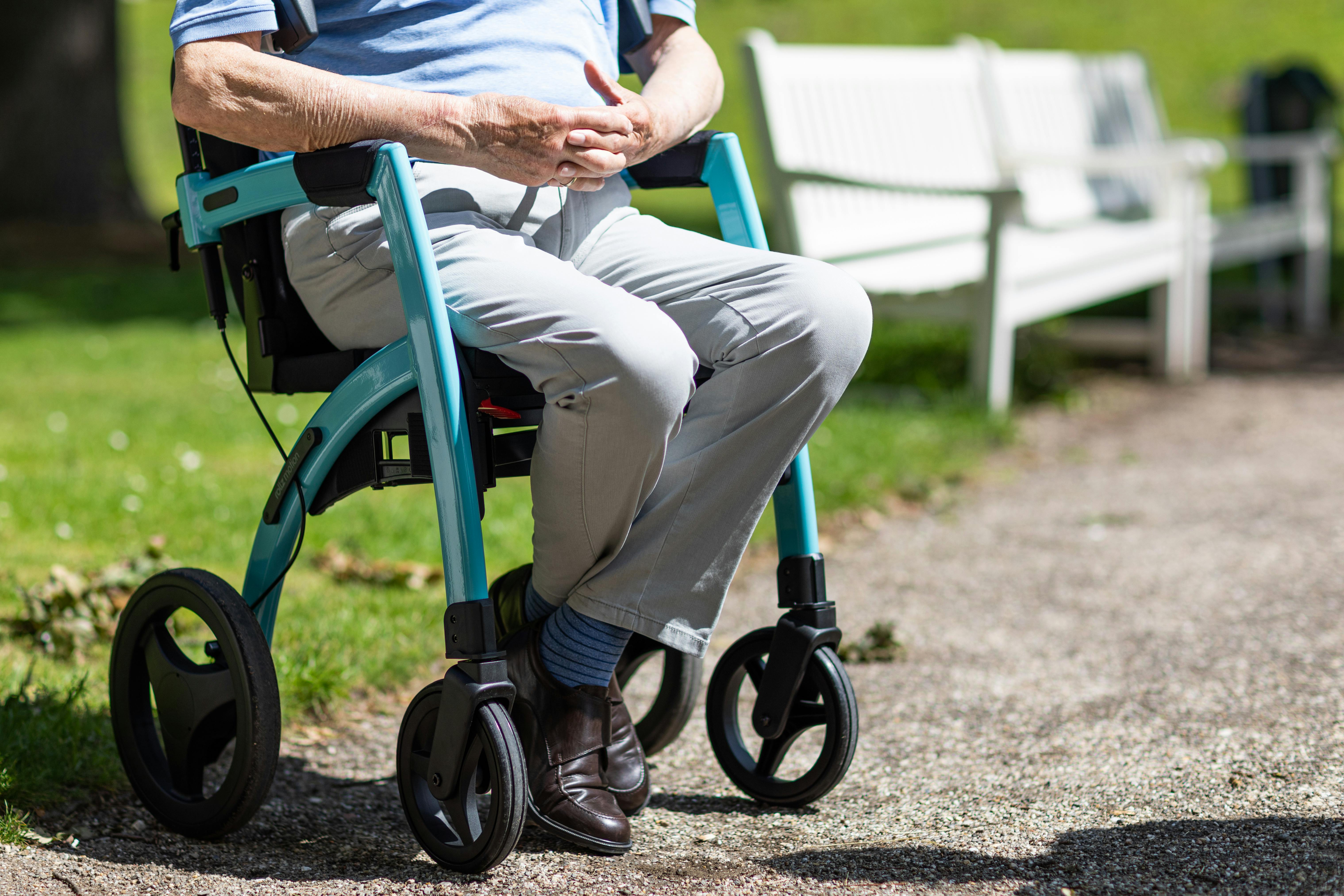
- Re-evaluate the mobility aid. If the person was not using a mobility aid, it may be time to consider one. If they were using one, it may need to be upgraded. A cane user who falls may need a walker. A walker user who falls may need a rollator with a seat or additional home modifications. For guidance on choosing between mobility aids, see our rollator vs walker comparison.
When to Escalate to More Mobility Support
As a caregiver, one of the hardest conversations involves suggesting that a loved one needs more help than they currently have. Here are signs that it may be time to increase the level of mobility support:
- Multiple falls in a short period. Two or more falls within six months indicate that the current situation is not safe.
- Near-falls that are becoming frequent. Catching themselves on furniture, grabbing walls, or stumbling regularly.
- Declining ability to perform daily activities. Difficulty with bathing, dressing, cooking, or moving between rooms.
- Fear of falling. When the person starts avoiding activities (going outside, visiting friends, walking to the mailbox) because they are afraid of falling, the fear itself becomes a risk factor. Reduced activity leads to further muscle weakness, which increases fall risk.
- Caregiver exhaustion. If you are spending significant time and energy worrying about falls and providing physical assistance, it may be time for professional help, whether that is a physical therapy evaluation, a home health aide, or a more supportive living arrangement.
One signal deserves separate attention: falls that happen while a walker is actually in use. That means the device is no longer providing enough support, and no amount of reminding or technique correction will change it. See when a walker is no longer safe for what to rule out first and what comes next.
Resources for Caregivers
National Council on Aging (NCOA): The NCOA’s Falls Prevention Awareness program provides educational materials, community program directories, and evidence-based fall prevention resources. Visit ncoa.org for more information.
Area Agencies on Aging: Your local AAA can connect you with fall prevention programs, home modification assistance, and caregiver support services in your community. Find your local agency at eldercare.acl.gov or call the Eldercare Locator at 1-800-677-1116.
Physical therapy referral: A physical therapist can perform a comprehensive fall risk assessment, design a personalized exercise program, evaluate the need for mobility aids, and assess the home environment. Most insurance plans, including Medicare, cover physical therapy with a doctor’s referral.
Caregiver support groups: The emotional burden of fall prevention is real. Connecting with other caregivers who understand the anxiety, guilt, and exhaustion can provide meaningful support. The Caregiver Action Network (caregiveraction.org) and local AAAs can help you find support groups in your area.
FAQ
How common are falls among seniors?
One in four adults aged 65 and older falls each year, according to the CDC. That is approximately 14 million older Americans annually. Falls are the leading cause of injury-related death in adults over 65 and the most common cause of traumatic brain injuries and hip fractures in this age group. The risk increases with age: by age 80, the fall rate is closer to one in three.
What is the single most effective fall prevention measure?
Exercise programs that target balance and lower body strength have the strongest research evidence for fall prevention. The Otago Exercise Program and Tai Chi have both been shown to reduce falls by 20 to 35 percent in clinical trials. However, fall prevention works best as a multi-component approach that also addresses medications, vision, footwear, and home hazards.
Should I remove all rugs from my parent’s home?
Throw rugs and scatter rugs are one of the most common tripping hazards and should be removed whenever possible. If the person is strongly attached to a particular rug, secure it with double-sided carpet tape or a non-slip rug pad. However, removing rugs entirely is the safest option and costs nothing.
How do I convince my parent they need a walker or cane?
This is one of the most common caregiver challenges. Framing the conversation around independence rather than limitation often helps. Instead of “You need a walker because you might fall,” try “A rollator would let you walk farther and do more things on your own.” Involving their doctor or physical therapist in the recommendation can also help, as many people are more receptive to professional advice than family suggestions.
Does Medicare cover fall prevention programs?
Medicare covers certain fall prevention services including physical therapy evaluations, balance and strength training prescribed by a doctor, and annual wellness visits that include fall risk screening. Medicare does not directly cover home modifications (like grab bars or ramp installation), though some Medicare Advantage plans include limited home modification benefits. Medicaid HCBS waivers may cover home modifications in some states.
When should a fall lead to an emergency room visit?
Seek emergency care if the person hit their head during the fall, has severe or increasing pain, cannot bear weight on a limb, shows signs of a fracture (deformity, swelling, bruising), loses consciousness even briefly, has confusion or disorientation, is taking blood thinners (which increase the risk of internal bleeding from seemingly minor injuries), or cannot get up from the floor. When in doubt, call the person’s doctor for guidance or call 911.
The MobilityLane Team
Written by a caregiver with 18+ years of experience supporting family members with chronic illness and mobility challenges, and medical training in mobility recovery. We research and write about mobility solutions to help people maintain independence and quality of life.
Learn more about us →Stay Independent, Stay Informed
Get our weekly guide to mobility solutions, funding tips, and home safety resources delivered to your inbox.
Thank you! Check your inbox to confirm your subscription.
Something went wrong. Please try again.
Join 1,000+ caregivers and families. Unsubscribe anytime.
Related Guides

Home Accessibility Checklist: Room-by-Room Safety Guide
A comprehensive room-by-room home accessibility checklist for seniors. Covers grab bars, ramps, lighting, bathroom safet...

Best Grab Bars for Elderly: Bathroom Safety Essentials
We reviewed the 7 best grab bars for elderly bathroom safety. Covers wall-mounted, suction cup, tension pole, and fold-d...
Rollator vs Walker: Which Mobility Aid Is Right for You?
Compare rollators and walkers side by side. Learn the key differences in wheels, brakes, seats, and stability to find th...