Table of Contents
Key Takeaways
- Under the Americans with Disabilities Act, a service animal is a dog individually trained to perform tasks directly related to a person’s disability; miniature horses are covered under separate provisions.
- Service animals are legally distinct from emotional support animals and therapy animals, which do not have public access rights under the ADA.
- Mobility service dogs can perform tasks such as retrieving dropped items, providing brace support, opening doors, pulling wheelchairs, and alerting to medical events.
- Obtaining a mobility service dog can take one to two years and involves selection, task training, and team training with the handler.
- There is no national registry or certification required under the ADA; businesses may ask only two specific questions to verify a service animal.
What the ADA Says About Service Animals
The Americans with Disabilities Act defines a service animal as a dog that has been individually trained to do work or perform tasks for a person with a disability. The task must be directly related to the person’s disability. Under this definition, the dog’s training is what matters, not paperwork, vests, or certificates. A dog that simply provides comfort by its presence, without performing a specific trained task, does not meet the ADA definition.
The Department of Justice also recognizes miniature horses as service animals under certain conditions, including factors such as size, housebreaking, and whether the facility can reasonably accommodate them. Outside of these two species, animals do not qualify as service animals under federal law, though some states have broader definitions.
This distinction is important because service animals have public access rights that other categories of animals do not. They can accompany their handlers into restaurants, stores, hotels, hospitals, and other places of public accommodation. Housing and air travel are governed by separate laws with their own rules.
How Service Animals Differ From Emotional Support and Therapy Animals
Confusion about these categories is widespread, so it is worth being precise.
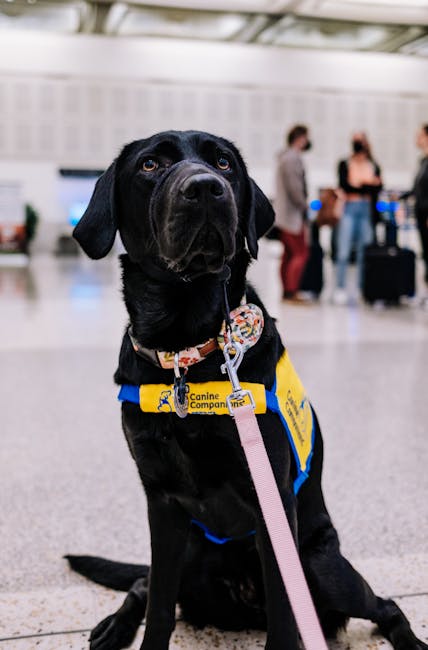
Service animals are trained to perform specific tasks for an individual with a disability. They have ADA public access rights and travel with their handler almost everywhere. A mobility service dog that retrieves dropped items for a wheelchair user is a service animal.
Emotional support animals provide comfort through their presence. They are not required to have any specific training and are not recognized as service animals under the ADA. They do not have general public access rights, though they may have certain housing protections under the Fair Housing Act.
Therapy animals are pets that visit hospitals, schools, and nursing homes with their owners to provide comfort to many people. They work as volunteers through therapy animal organizations and do not have public access rights beyond the facilities where they are welcomed.
Understanding this distinction matters for legal rights, for honest communication with businesses, and for respecting the seriousness of the training that goes into a true service animal.
Tasks a Mobility Service Dog Can Perform
Mobility service dogs are trained to assist with a wide range of physical tasks. The specific tasks depend on the handler’s disability, the dog’s size and temperament, and the training program. Common tasks include:
- Retrieving dropped items such as keys, phones, wallets, canes, or remote controls. This is one of the most common tasks and reduces the strain of bending or transferring.
- Opening and closing doors using tugs attached to handles or pressing automatic door buttons.
- Turning lights on and off with wall switches or touch plates installed at nose height.
- Bracing and counterbalance for a handler who has trouble rising from a chair or maintaining balance while standing. Only larger, structurally sound dogs can perform this safely.
- Pulling a manual wheelchair short distances, such as across a flat parking lot, for handlers who do not have power chairs.
- Carrying items in a harness-mounted pack.
- Alerting to medical events such as seizures or cardiac changes in handlers whose conditions have additional medical features.
- Summoning help by pressing an emergency button or finding a family member on command.
Handlers living with conditions like multiple sclerosis, cerebral palsy, or spinal cord injury often have overlapping mobility and fatigue needs. Our articles on mobility aids for ms and spinal cord injury wheelchair selection describe how equipment choices interact with daily life; a service dog can complement but not replace these tools.
Training a Mobility Service Dog
Training a mobility service dog is a long, structured process. Most professionally trained dogs go through 18 to 24 months of preparation.
Selection
Not every dog is suited to service work. Programs carefully evaluate puppies for temperament, health, and physical soundness. Breeds commonly used for mobility work include Labrador Retrievers, Golden Retrievers, Standard Poodles, and various mixes. Dogs that will perform bracing tasks must be tall and structurally sound enough to support a handler’s weight without long-term joint damage.
Foundation Training
Puppies spend their first year or more in foundation training, often with volunteer puppy raisers. During this phase, they learn basic obedience, public manners, and exposure to a wide range of environments and situations. They visit grocery stores, ride public transit, walk through busy sidewalks, and tolerate loud noises.
Task Training
After foundation training, dogs move to advanced task training focused on the specific skills they will need. A dog destined for a wheelchair user learns different tasks than one going to a handler with balance impairment. This phase can take six months or longer.
Team Training
Finally, the dog is matched with a handler and the two train together. Team training usually lasts from one to several weeks and covers how to issue commands, how to care for the dog, how to handle public access situations, and how to troubleshoot problems. The handler must learn as much as the dog.
Owner-Training
Some handlers train their own service dogs rather than going through a program. Owner-training is legal under the ADA but demanding. It requires deep knowledge of dog training, significant time commitment, and honest evaluation of the dog’s temperament. Handlers who owner-train often work with professional trainers for specific tasks.
How to Obtain a Service Dog
People seeking a mobility service dog generally choose between an established program and owner-training.
Established Programs
Nonprofit programs place fully trained service dogs with qualified applicants. These programs typically have application processes that evaluate the applicant’s disability, home environment, ability to care for a dog, and fit with available dogs. Waiting lists can be long, sometimes two years or more. Many programs provide dogs at little or no cost to the recipient, funded through donations. Others charge significant fees.
When evaluating a program, look for membership in or accreditation by recognized industry organizations, transparent training practices, a clear aftercare plan, and realistic descriptions of what their dogs can and cannot do. Be cautious of programs that promise fast timelines or guarantee tasks the dog has not yet been trained to perform.
Owner-Training
Owner-training gives handlers more control and can be faster for people who already have a suitable dog and relevant experience. The handler may work with a professional trainer on specific tasks while handling public access training themselves. The owner-trained dog must still meet the ADA definition, meaning it must be individually trained to perform tasks related to the handler’s disability.
Costs and Funding
Professionally trained mobility service dogs commonly cost between twenty and fifty thousand dollars to train, though recipients often pay a fraction of that due to nonprofit funding. Owner-training costs less in cash but more in time. Common funding sources include disability-focused foundations, veteran service organizations for handlers with military backgrounds, crowdfunding, and state vocational rehabilitation agencies in some cases. Health insurance generally does not cover service dogs.
Legal Rights in Public Places
Under the ADA, service animals must be allowed to accompany their handlers in all areas of a public accommodation where members of the public are allowed to go. This includes restaurants, grocery stores, hotels, hospitals, government buildings, and many other venues. Staff may ask only two questions to verify a service animal:
- Is the dog a service animal required because of a disability?
- What work or task has the dog been trained to perform?
Staff may not ask about the handler’s disability, demand proof of certification, or require the dog to demonstrate its task. They may also not charge extra fees or require the handler to sit in a separate area. A business can ask the handler to remove a service animal only if the dog is out of control and the handler cannot regain control, or if the dog is not housebroken.
There are a few areas where service animals may legitimately be excluded, such as sterile environments in hospitals where even highly trained dogs cannot safely enter. In those cases, the facility must still serve the handler in some other way.
Workplace rights are governed by separate ADA provisions. Employees who need to bring a service dog to work should follow the accommodation process described in our ada workplace accommodations mobility article.
Practical Considerations for Handlers and Families
A service dog is both a working partner and a living animal with its own needs. Handlers and their families should plan for the daily realities of the partnership.
Daily Care
Service dogs need regular feeding, exercise, grooming, and veterinary care. They need off-duty time to rest and play. Handlers who are themselves physically limited may need help with these tasks, especially on difficult days. Family members who share caregiving responsibilities can incorporate dog care into their routines alongside the equipment tasks described in our caregiver mobility equipment guide.
Physical Health of the Dog
Mobility work, especially bracing and pulling tasks, places physical demands on the dog. Programs monitor joint health, weight, and general fitness throughout the dog’s career. Handlers should expect to retire their working dogs when they can no longer perform tasks safely, typically between ages eight and ten, and plan for the transition to a successor dog.
Working Life and Exercise
A working dog needs regular exercise outside of its working tasks. Handlers often build activity into their daily routine, which can also benefit their own health. Our article on accessible exercise wheelchair users describes ways to stay active as a wheelchair user, and a service dog can become part of that activity.
When a Service Dog May Not Be the Right Fit
Service dogs are extraordinary partners, but they are not for everyone. Reasons a dog may not be a good match include living situations that do not accommodate a dog, severe allergies in the household, inability to provide consistent care, or a preference for not having the visibility that a working dog brings. Alternative or complementary options include trained assistance through human caregivers, technology such as grabber tools and smart home devices, and mobility equipment tailored to the handler’s condition.
Choosing a service dog is a significant commitment for the handler, the family, and the dog. When the match is right, the partnership can profoundly expand independence, safety, and quality of life.
Frequently Asked Questions
Do I need to register or certify my service animal?
No. The ADA does not require any registration, certification, or identification for service animals. Websites that sell registrations, certificates, or vests claiming to be required by law are misleading. Businesses cannot legally require paperwork. The only two questions they may ask are whether the animal is a service animal required because of a disability and what task it has been trained to perform.
Can my apartment or landlord refuse a service dog?
Under the Fair Housing Act, housing providers must make reasonable accommodations for people with disabilities who need service animals or emotional support animals, even in otherwise no-pet housing. They may not charge pet fees for these animals. A landlord may require documentation when the disability or the need for the animal is not obvious, and the accommodation process may take some back and forth. Housing rules differ from public access rules, so the documentation allowed varies.
What is the difference between a service dog and an emotional support animal?
A service dog is individually trained to perform specific tasks related to the handler’s disability and has public access rights under the ADA. An emotional support animal provides comfort through its presence and does not need specific task training. It does not have general public access rights but may have housing protections. The distinction is based on training and legal definition, not on how meaningful the animal is to its person.
How long does it take to get a service dog?
From first application to placement, obtaining a fully trained service dog from an established program typically takes between one and three years, including waiting list time and team training. Owner-training timelines vary widely depending on the handler’s experience and the starting age and temperament of the dog, but most owner-trained teams need at least 18 months of focused work before the dog is reliable in public.
Can a service dog fly with me on an airplane?
Air travel is governed by the Air Carrier Access Act, which has its own rules distinct from the ADA. Trained service dogs are generally allowed in the cabin at no extra cost, but airlines may require advance notice and specific forms attesting to the dog’s training, health, and behavior. Emotional support animals are no longer broadly protected under air travel rules and are now typically treated as pets. Check with the specific airline at least a few days before travel.
The MobilityLane Team
Written by a caregiver with 18+ years of experience supporting family members with chronic illness and mobility challenges, and medical training in mobility recovery. We research and write about mobility solutions to help people maintain independence and quality of life.
Learn more about us →Stay Independent, Stay Informed
Get our weekly guide to mobility solutions, funding tips, and home safety resources delivered to your inbox.
Thank you! Check your inbox to confirm your subscription.
Something went wrong. Please try again.
Join 1,000+ caregivers and families. Unsubscribe anytime.
Related Guides

ADA Workplace Accommodations for Mobility Disabilities: Your Rights
How the Americans with Disabilities Act protects workers with mobility disabilities, including reasonable accommodation ...

Spinal Cord Injury and Wheelchair Selection: Matching Equipment to Injury Level
How spinal cord injury level affects wheelchair needs, from manual ultralight chairs for paraplegic users to power chair...

Mobility Aids for Multiple Sclerosis: A Practical Guide
Practical guide to mobility aids for multiple sclerosis. Covers AFOs, canes, rollators, wheelchairs, cooling vests, FES ...