
Table of Contents
Key Takeaways
- Arthritis affects mobility in two distinct ways, through joint pain and through joint stiffness, and the best equipment addresses both
- Ergonomic grip design is the single most important feature for any handheld mobility device when arthritis affects the hands or wrists
- A cane or walker used correctly reduces load on lower body joints by 20-25%, directly reducing pain during walking
- Morning stiffness is a predictable challenge, so having equipment and strategies specifically for the first hour after waking makes a meaningful difference
- Lightweight equipment is not a luxury for people with arthritis; excess weight aggravates every affected joint involved in lifting and maneuvering the device
How Arthritis Affects Mobility
Arthritis is not a single disease. It is a category encompassing more than 100 conditions that affect joints, and the two most common forms, osteoarthritis and rheumatoid arthritis, impact mobility in different ways.
Osteoarthritis results from cartilage breakdown in weight-bearing joints. The knees, hips, and spine are the most commonly affected. Pain increases with activity and loading, meaning that walking, climbing stairs, and standing from seated positions become progressively more difficult. Osteoarthritis is mechanical in nature: the more you load the damaged joint, the more it hurts.
Rheumatoid arthritis is an autoimmune condition that attacks the joint lining, causing inflammation, swelling, and pain. It frequently affects the hands, wrists, and feet before progressing to larger joints. RA symptoms fluctuate, with flare periods of intense pain and stiffness alternating with periods of relative calm. Morning stiffness lasting more than 30 minutes is a hallmark of RA.
A related condition, fibromyalgia, shares many of the same fatigue and stiffness challenges and often responds to similar equipment strategies.
Both types share a common outcome: they make movement painful, which leads to reduced activity, which leads to muscle weakness, which leads to further mobility decline. Mobility aids interrupt this cycle by reducing the load on affected joints, allowing continued activity with less pain.
Walking Aids for Arthritis
The primary goal of a walking aid for arthritis is joint offloading: transferring some of the person’s weight away from painful joints and onto the device. The right device depends on which joints are affected and how severely.
Canes
A cane is often the first mobility aid for arthritis affecting the hip or knee. Used correctly, a cane in the opposite hand reduces the load on a painful hip by approximately 25%. That reduction can be the difference between a painful walk and a manageable one.
Handle design matters enormously. Standard round-handle canes (the crook-top style) concentrate pressure on a small area of the palm. For someone with hand or wrist arthritis, this can make the cane itself a source of pain. Ergonomic handles, particularly the Fischer-style handle with a broad, contoured palm rest, distribute force across a larger area and maintain the wrist in a neutral position. Foam and gel-padded grips also reduce hand strain. Our guide to walking canes for balance covers handle types in more detail.
Proper cane use. The cane goes in the hand opposite the affected leg. This is counterintuitive for many people, but it is biomechanically correct. The cane and the affected leg move forward together, creating a wider base of support. Using the cane on the same side as the painful joint actually increases loading rather than reducing it. For a complete walkthrough of technique, see our article on how to use a cane properly.
Quad canes. These have a four-point base that provides more stability than a standard cane but less than a walker. They stand upright independently, which is helpful for someone who frequently needs to set down their cane. However, they are heavier and slower to maneuver on uneven surfaces.
Walkers and Rollators
When arthritis affects both legs, or when hip and knee involvement makes a cane insufficient, a walker provides the next level of support.
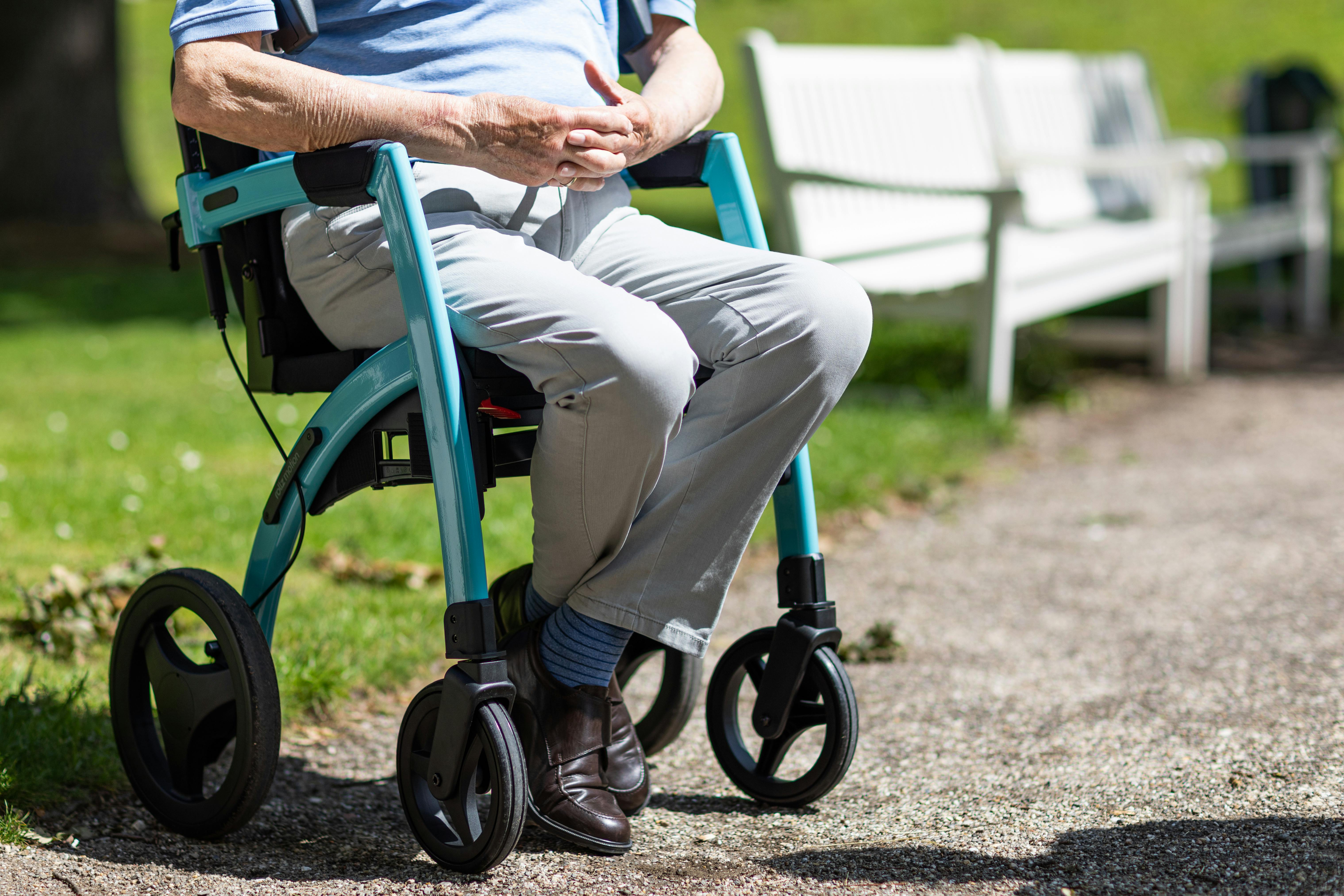
Standard walkers versus rollators. A standard pick-up walker provides maximum stability but requires the user to lift it with each step. For someone with hand, wrist, or shoulder arthritis, this lifting motion can be painful. Rollators eliminate the lifting requirement and allow a more natural gait pattern. Understanding the trade-offs between rollators and walkers helps determine the right choice.
Platform attachments. For severe wrist or hand arthritis that makes gripping a handle painful or impossible, platform (or forearm) attachments convert a standard walker into a forearm-supported device. The user rests their forearms on padded troughs and grips a vertical handle, transferring weight through the forearms instead of the hands. This is one of the most effective adaptations for people with significant hand involvement.
Wheel considerations. Larger wheels (8 inches) roll more easily over thresholds, carpet, and outdoor surfaces, requiring less pushing effort. Smaller wheels (5 inches) are more maneuverable in tight spaces but require more force on uneven ground. For someone whose energy and strength are limited by arthritis, larger wheels reduce overall effort.
Weight of the device. Every pound the device weighs is a pound the person must maneuver. When arthritis affects the upper body, a heavy walker becomes a burden rather than an aid. Look for aluminum or carbon fiber frames. A difference of two or three pounds may seem trivial, but over the course of a full day of use, it is significant.
Adaptive Tools for Daily Activities
Arthritis does not only affect walking. It affects every activity that involves gripping, pinching, twisting, or reaching. Adaptive tools address these challenges across daily life.
Hand and Grip Aids
Jar openers and bottle openers. Twisting motions are among the most painful movements for arthritic hands. Under-cabinet jar openers, electric jar openers, and rubber grip pads reduce or eliminate the twisting force required.
Built-up handles. Wrapping foam tubing around utensils, pens, toothbrushes, and other tools increases the grip diameter, reducing the force needed to hold them. This is one of the simplest and most cost-effective adaptations available.
Key turners. A key turner adds a large, ergonomic handle to a standard key, converting a painful pinch-and-twist motion into an easier palm-press motion.
Button hooks and zipper pulls. For dressing tasks that require fine motor precision, these tools provide a mechanical advantage that bypasses the need for strong finger pinch.
Kitchen and Household Aids
Lightweight cookware. Heavy pots and pans strain arthritic wrists and hands. Lightweight alternatives reduce this strain without sacrificing function.
Ergonomic kitchen tools. Angled knives, rocker knives (which use a rocking motion instead of sawing), and spring-loaded scissors all reduce the force and range of motion required for common kitchen tasks.
Reachers. A 26-32 inch reacher eliminates bending and overhead reaching, both of which stress the spine, hips, and shoulders. Keep one on each level of the home for convenience.
Bathroom Adaptations
The bathroom presents particular challenges for people with arthritis because it combines slippery surfaces with movements that stress multiple joints: lowering to and rising from the toilet, stepping into and out of the shower, and performing hygiene tasks with wet, slippery hands.
Raised toilet seats. Raising the toilet height by 2-6 inches dramatically reduces the effort required to sit and stand. This is especially important for hip and knee arthritis, where deep flexion is painful. A raised seat with armrests provides both height and leverage.
Grab bars. Strategically placed grab bars in the shower and beside the toilet provide stable handholds that reduce joint strain during transitions. Look for grab bars with textured surfaces and ergonomic shapes for arthritic hands. Our grab bar guide covers placement and installation.
Long-handled bath aids. Sponges, brushes, and washing aids on extended handles reduce the need to bend and reach during bathing, minimizing stress on the spine, hips, and shoulders.
Ensuring the entire home is set up to minimize joint stress involves more than bathroom modifications. A comprehensive home accessibility review identifies opportunities in every room.
Managing Morning Stiffness
Morning stiffness is one of the most disabling aspects of arthritis, particularly rheumatoid arthritis. Joints are stiffest after periods of inactivity, and the first 30-60 minutes of the day often represent the most difficult mobility window.
Pre-mobility warm-up. Before getting out of bed, spend 5-10 minutes doing gentle range-of-motion exercises. Ankle circles, knee bends, wrist rotations, and finger flexion-extension all help pump fluid into the joints and reduce initial stiffness. These can be done while still lying down.
Heated mattress pad or electric blanket. Heat reduces stiffness. Sleeping with gentle warmth, or turning on heat 20-30 minutes before rising, can noticeably reduce the severity of morning stiffness.
Stage equipment at the bedside. Keep your cane or walker within arm’s reach. Have slip-on shoes ready (avoiding laces during peak stiffness). Place medications and a glass of water on the nightstand so you can take morning anti-inflammatories before attempting to get up.
Plan demanding tasks for later. Schedule grocery shopping, exercise, and errands for mid-morning or afternoon when joints have loosened. Use the morning for low-demand activities.
Exercise and Activity with Arthritis
This may seem counterintuitive in a guide about mobility aids, but regular physical activity is one of the most effective interventions for arthritis mobility. The goal is finding the right type and amount of activity, supported by appropriate equipment.
Low-impact exercise. Swimming, water aerobics, cycling, and walking on flat surfaces provide cardiovascular and muscular benefits without the joint impact of running or jumping. A rollator with a seat allows walking with built-in rest breaks, extending the distance a person with arthritis can cover.
Strength training. Muscles act as shock absorbers for joints. Stronger muscles mean less force transmitted through arthritic joints during daily activities. Light resistance bands and bodyweight exercises targeting the muscles around affected joints are particularly beneficial.
Range-of-motion exercises. Daily stretching and joint mobility work prevents the progressive stiffening that leads to contractures (permanent loss of range). Even 10 minutes of daily range-of-motion exercise preserves joint function.
Walking aid accessories like cup holders, baskets, and phone mounts make it easier to stay active by eliminating the need to carry items while using a mobility device, which is particularly valuable when hand grip is compromised.
Joint Protection Principles
Beyond specific equipment, a set of general principles guides all activity choices for people with arthritis.
Respect pain. Pain lasting more than two hours after an activity indicates you did too much. Use this as a guideline for adjusting activity levels, not as a reason to stop all activity.
Use the strongest available joint. Carry bags on the forearm instead of gripping with the fingers. Push doors open with the palm or shoulder instead of the fingers. Use hip and leg muscles for lifting instead of the back.
Distribute loads. Carry items in two hands instead of one. Use a backpack instead of a shoulder bag. Divide heavy loads into smaller trips.
Change positions frequently. Holding any position for more than 20-30 minutes increases stiffness. Alternate between sitting, standing, and walking throughout the day.
Plan and pace. Break large tasks into smaller segments with rest periods. Organize your home and work space to minimize unnecessary steps and reaches.
If arthritis has led to or will lead to joint replacement surgery, the recovery process involves its own set of mobility equipment considerations. Our guides for hip replacement recovery and knee replacement recovery cover the specific devices and timeline for post-surgical mobility. For a comprehensive look at how arthritis progression affects equipment needs over time and which devices to consider at each stage, see our arthritis mobility equipment needs guide.
FAQ
Which type of cane handle is best for arthritic hands?
The Fischer-style ergonomic handle is generally the best choice for arthritis. It features a broad, contoured platform that distributes force across the entire palm rather than concentrating it on a small area. The handle keeps the wrist in a neutral position, minimizing the bending and twisting that aggravate arthritis. Gel or foam padding over the handle adds cushioning. Avoid traditional crook-top cane handles, as the curved shape forces a tight grip and places pressure on a small point of the palm. If you have significant hand deformity, an occupational therapist can recommend or custom-mold a handle shape that fits your specific hand.
Can using a walker or rollator make arthritis worse?
No, when properly fitted and used correctly. In fact, the opposite is true: a walker or rollator reduces the load on arthritic joints, allowing continued activity with less pain. Continued activity is critical for maintaining muscle strength, joint range of motion, and cardiovascular health, all of which slow arthritis progression. The concern to watch for is upper body strain if the device is not properly sized or if the person is gripping too tightly due to poor handle design. Ensure the device height allows a relaxed arm position, and choose ergonomic grips that minimize hand strain.
What should I look for in shoes if I have foot or ankle arthritis?
Look for shoes with a firm, supportive heel counter (the back of the shoe that wraps around the heel), a rocker-bottom sole that reduces the bending motion at the toe joints during walking, a wide toe box that does not compress arthritic toe joints, and a cushioned midsole that absorbs impact. Avoid flat, flexible shoes like ballet flats or flip-flops, which provide no support. Slip-on shoes or shoes with Velcro closures eliminate the need for lace-tying, which is painful with hand arthritis. Custom orthotics prescribed by a podiatrist can further redistribute pressure away from painful areas of the foot.
Are there mobility aids specifically designed for rheumatoid arthritis versus osteoarthritis?
The equipment categories overlap significantly, but the emphasis differs. Rheumatoid arthritis more frequently affects the hands, wrists, and feet, so RA-focused equipment prioritizes ergonomic handles, forearm supports, and adaptive tools for fine motor tasks. Osteoarthritis more commonly affects weight-bearing joints (knees, hips, spine), so OA-focused equipment emphasizes joint offloading through canes, walkers, raised toilet seats, and cushioned footwear. The key distinction is that RA is an inflammatory condition with flare cycles, so equipment planning should account for variable ability levels. Having both a cane (for good days) and a rollator (for flare days) available is practical, not excessive.
The MobilityLane Team
Written by a caregiver with 18+ years of experience supporting family members with chronic illness and mobility challenges, and medical training in mobility recovery. We research and write about mobility solutions to help people maintain independence and quality of life.
Learn more about us →Stay Independent, Stay Informed
Get our weekly guide to mobility solutions, funding tips, and home safety resources delivered to your inbox.
Thank you! Check your inbox to confirm your subscription.
Something went wrong. Please try again.
Join 1,000+ caregivers and families. Unsubscribe anytime.
Related Guides

Best Walking Canes for Balance Problems: Expert Picks
We reviewed the 7 best walking canes for balance problems. Compare single-point, offset, quad, folding, and seat canes w...
Rollator vs Walker: Which Mobility Aid Is Right for You?
Compare rollators and walkers side by side. Learn the key differences in wheels, brakes, seats, and stability to find th...
Arthritis and Mobility Equipment: How Joint Pain Shapes Your Equipment Choices
How different types of arthritis affect mobility and equipment selection. Covers grip modifications, joint protection pr...