
Table of Contents
Key Takeaways
- Mobility equipment needs change as stroke recovery progresses, so equipment that is right at discharge may need to be replaced within weeks or months
- One-sided weakness (hemiparesis) is the most common mobility challenge after stroke, and equipment must be operable with one hand or adapted for asymmetric use
- Ankle-foot orthoses (AFOs) address foot drop, one of the most common barriers to safe walking after stroke
- The rehabilitation team (physical therapist, occupational therapist, physiatrist) should drive all equipment decisions, as premature or inappropriate equipment can actually impede recovery
- Home preparation before discharge dramatically reduces fall risk and readmission rates during the critical first weeks at home
Understanding Stroke’s Impact on Mobility
A stroke occurs when blood supply to part of the brain is interrupted, causing brain cells to die. Once a survivor returns home, post-stroke home modifications are often the difference between safe independence and repeated falls. The resulting damage affects whatever functions that brain region controlled. Because movement is controlled by one side of the brain crossing over to the opposite side of the body, a stroke on the left side of the brain causes right-sided weakness, and vice versa.
This one-sided weakness, called hemiparesis (partial weakness) or hemiplegia (complete paralysis), is the most common mobility consequence of stroke. Approximately 80% of stroke survivors experience some degree of one-sided weakness. The severity ranges from mild clumsiness in one hand to complete inability to move one side of the body.
Beyond weakness, stroke can affect mobility through several other pathways.
Spasticity. Damaged motor pathways often result in increased muscle tone, causing stiffness, involuntary tightening, and sometimes painful spasms in the affected limbs. Spasticity typically develops days to weeks after the stroke and can worsen over time without management.
Balance and proprioception. The brain’s ability to sense body position in space may be impaired, leading to poor balance even when strength is relatively preserved. A person may feel unsteady not because their legs are weak but because their brain cannot accurately detect where their feet are.
Cognitive and perceptual changes. Spatial neglect (unawareness of one side of space), impaired judgment, difficulty sequencing multi-step tasks, and visual field cuts all affect the safe use of mobility equipment. These factors are why professional guidance on equipment selection is particularly important after stroke.
Fatigue. Post-stroke fatigue is pervasive and often underappreciated. The brain is working harder than normal to compensate for damaged pathways, consuming enormous energy. Activities that were effortless before the stroke become exhausting. Equipment planning must account for this energy limitation.
The Recovery Timeline and Equipment Progression
Stroke recovery is not linear, but it does follow a general pattern. Equipment needs shift at each stage, and understanding this progression helps set realistic expectations.
Acute Hospital Phase (Days 1-7)
During the initial hospitalization, the focus is medical stabilization. Mobility is limited and supervised. Physical and occupational therapists begin bedside assessments to evaluate the extent of motor impairment, balance, and functional capacity.
Equipment at this stage is typically institutional: hospital beds, bedside commodes, standard wheelchairs. The rehab team begins planning for the next phase, but major equipment decisions are premature because the person’s abilities are changing rapidly in these early days.
Inpatient Rehabilitation (Weeks 1-6)
For moderate to severe strokes, inpatient rehabilitation provides intensive therapy, typically three or more hours per day. This is where the most rapid recovery occurs, particularly in the first three to four weeks.
During inpatient rehab, the therapy team trials various equipment options under supervised conditions. They assess which type of walking aid the person can use safely, whether an AFO is needed, what level of wheelchair support is appropriate, and what home modifications will be required for discharge.
Key equipment introduced during this phase:
Wheelchairs. Most stroke survivors use a wheelchair during early rehabilitation, even if walking recovery is expected. A hemi-wheelchair, with a lower seat height that allows the person to propel using their unaffected foot and hand, supports independent mobility while walking endurance builds. Understanding the differences between power wheelchairs and scooters becomes relevant if walking recovery is limited.
Walking aids. The progression typically moves from parallel bars (in the therapy gym) to a hemi-walker (a one-sided frame providing broad support), then to a quad cane or standard cane as balance and strength improve. Not every person progresses through every stage, and some reach a plateau at a particular level. Understanding walker and rollator options helps when transitioning from institutional to home equipment.
AFOs. If foot drop is present, an ankle-foot orthosis is often introduced during inpatient rehab. Initial AFOs may be temporary or prefabricated, with custom-molded versions ordered once the person’s recovery pattern stabilizes.
Transition Home (Weeks 4-12)
The move from rehabilitation facility to home is one of the highest-risk periods in stroke recovery. Falls are most common in the first weeks after discharge, and many of these falls are preventable with proper preparation.
Home assessment before discharge. The occupational therapist should conduct or arrange a home assessment before the person leaves the facility. If an in-person visit is not possible, a detailed discussion with the caregiver about the home layout, combined with photos and measurements, allows the OT to identify critical modifications. Our home accessibility checklist provides a room-by-room framework for this evaluation.
Equipment delivery and setup. All prescribed equipment should be in the home and properly set up before discharge day. This includes the walking aid, wheelchair if needed, bedside commode, shower chair, grab bars, and any recommended ramps or threshold modifications. Arriving home to an unprepared environment is a setup for immediate problems.
Caregiver training. The caregiver should receive hands-on training in transfer techniques, wheelchair management, walking aid assistance, and fall recovery before discharge. Safe transfer methods are particularly critical, as transfers are the most common activity associated with post-stroke falls.
Ongoing Recovery (Months 3-12 and Beyond)
Stroke recovery continues well beyond discharge, though the pace typically slows. Outpatient therapy, home exercises, and daily functional practice continue to drive improvement. Equipment needs may change as the person gains strength, endurance, and confidence.
Stepping down equipment. A person who initially needed a quad cane may transition to a standard cane. Someone who relied on a wheelchair for all community mobility may begin using it only for longer distances. These transitions should be guided by the physical therapist, not attempted independently, as premature step-downs increase fall risk.
Stepping up equipment. Recovery is not always upward. Some people experience increased spasticity, new medical complications, or functional declines that require more supportive equipment. This is not failure. It is appropriate adjustment to current reality. For a detailed week-by-week breakdown of which equipment to expect at each recovery milestone, see our stroke recovery equipment timeline.
Essential Equipment Categories for Stroke Recovery
Ankle-Foot Orthoses (AFOs)
Foot drop, the inability to lift the front of the foot during walking, is one of the most common stroke-related gait problems. Without correction, it causes toe dragging, tripping, and an energy-wasting compensatory gait pattern. AFOs are the primary solution.
Posterior leaf spring AFO. A thin, flexible plastic brace that holds the ankle in a neutral position. It prevents the foot from dropping during the swing phase of walking while allowing some natural ankle movement. This is the most commonly prescribed type for stroke-related foot drop.
Solid ankle AFO. A rigid brace that completely immobilizes the ankle. Used when significant spasticity or instability requires maximum control. It provides the most support but limits natural gait mechanics.
Hinged AFO. Allows controlled dorsiflexion (upward movement) while preventing plantarflexion (foot drop). This design preserves more natural ankle motion than a solid AFO and is often used as recovery progresses and some ankle control returns.
Fitting and footwear. An AFO requires a shoe with a removable insole, a wide opening, and enough depth to accommodate the brace. The AFO-side shoe is typically one-half to one full size larger than the other foot. Proper fitting by an orthotist is essential, as a poorly fitting AFO can cause skin breakdown, pain, and gait problems.
Walking Aids
Hemi-walkers. A hemi-walker is a one-sided frame, wider and more stable than a cane but designed for one-handed use. It provides an intermediate level of support between a standard walker (which requires two hands) and a cane. For someone with complete hemiplegia who cannot grip with the affected hand, the hemi-walker offers more stability than any cane.
Quad canes. A cane with a four-point base provides more stability than a standard cane and stands upright independently. The offset base must be positioned so the four feet point away from the user’s body. Quad canes are slower than standard canes and can catch on uneven surfaces, but they provide important stability during the middle stages of recovery.
Standard canes. The goal for many stroke survivors is progression to a standard single-point cane, which allows the most natural and efficient gait. This transition happens when balance, strength, and confidence have recovered sufficiently. Sizing the cane correctly is important, as is using it on the correct side (the unaffected side, opposite the weak leg).
Wheelchairs
Hemi-height wheelchairs. Standard wheelchair seat height is too high for foot propulsion. A hemi-height wheelchair has a lower seat, allowing the person to reach the floor with their unaffected foot and scoot the chair forward. This is the preferred wheelchair configuration for most stroke survivors because it supports independent mobility.
Lightweight wheelchairs. For stroke survivors who will use a wheelchair long-term, a lightweight or ultra-lightweight manual wheelchair with custom seating improves comfort, posture, and propulsion efficiency. One-arm drive systems, which allow both rear wheels to be driven from one side, are available but require significant upper body strength and coordination.
Power wheelchairs. When a stroke results in severe bilateral weakness or when cognitive and physical factors prevent safe manual wheelchair use, a power wheelchair may be appropriate. Joystick controls can be positioned on whichever side retains adequate hand function. For Medicare coverage of wheelchairs, a face-to-face evaluation and prescription are required.
Home Modifications for Stroke Recovery
The home environment after a stroke requires modifications that go beyond standard aging-in-place adaptations. One-sided weakness creates unique challenges.
One-handed operation. Doors, faucets, appliances, and locks must all be operable with one hand. Lever-style door handles replace round knobs. Single-lever faucets replace dual-handle controls. Rocker light switches replace toggle switches.
Affected-side awareness. If the person has left-sided neglect (common after right-brain strokes), they may not notice obstacles, walls, or furniture on their left side. Clear wide pathways, padding on sharp corners, and visual cues (bright tape on doorframes) on the neglected side reduce collision injuries.
Fall prevention. Stroke survivors fall at roughly twice the rate of age-matched peers. Comprehensive fall prevention strategies are essential, with particular attention to transfers, bathroom activities, and nighttime mobility.
Stair management. If the home has stairs, a plan is needed before discharge. Options include stairlifts, first-floor living arrangements, or supervised stair training with the physical therapist. The rule of thumb for stair climbing after stroke is “up with the good, down with the bad”: the stronger leg leads going up, and the weaker leg leads going down, with the handrail on the affected side.
Working with the Rehabilitation Team
Equipment decisions after a stroke should not be made in isolation. The rehabilitation team brings clinical expertise that is essential for safe, appropriate choices.
Physical therapist (PT). Evaluates walking ability, balance, strength, and endurance. Recommends walking aids, AFOs, and exercise programs. The PT is the primary driver of mobility equipment decisions.
Occupational therapist (OT). Focuses on daily living activities: bathing, dressing, cooking, toileting. Recommends adaptive equipment, bathroom modifications, and home setup. The OT evaluates the home environment and identifies barriers to independence.
Physiatrist. A physician specializing in rehabilitation medicine. Writes prescriptions for equipment, manages spasticity with medications or injections, and coordinates the overall rehabilitation plan.
Orthotist. Designs, fabricates, and fits orthotic devices including AFOs. Works with the PT to ensure the brace supports the therapeutic goals.
Your role as patient or caregiver. Communicate openly about what is working and what is not. If equipment is uncomfortable, difficult to use, or being avoided, tell the team. They cannot adjust what they do not know about. Ask questions, request demonstrations, and insist on hands-on training before discharge.
FAQ
How long after a stroke will I need mobility equipment?
This varies enormously depending on the severity and location of the stroke, the person’s age and overall health, and the intensity of rehabilitation. Some people regain independent walking within weeks. Others use mobility equipment permanently. The most significant motor recovery typically occurs in the first three to six months, with continued but slower improvement possible for a year or more. The honest answer is that no one can predict with certainty how much mobility will return. Equipment decisions should address current needs while supporting ongoing recovery, and should be reassessed regularly as abilities change.
Can using a wheelchair slow down walking recovery after a stroke?
This is a common concern, and the short answer is no, when used appropriately. A wheelchair does not prevent walking recovery. It provides safe, independent mobility while walking ability is being rebuilt through therapy. The key is that the wheelchair supplements walking practice rather than replacing it. A person should continue daily walking practice as prescribed by their physical therapist, using the wheelchair for distances and situations that exceed their current walking tolerance. The danger is not the wheelchair itself but rather abandoning walking practice entirely in favor of wheelchair-only mobility.
What is the most important home modification before coming home from stroke rehab?
Bathroom safety. The bathroom combines wet surfaces, hard fixtures, confined spaces, and physically demanding movements (sitting, standing, transferring), making it the most dangerous room for someone recovering from a stroke. At minimum, install grab bars beside the toilet and in the shower, add a shower chair or transfer bench, place non-slip mats on the floor, and ensure the path from bedroom to bathroom is clear and well-lit. These modifications should be completed before the person arrives home, not afterward. Falls in the first days after discharge are disproportionately common and often occur in the bathroom.
Should I buy equipment before or after talking to the rehab team?
After. Always consult with the physical therapist and occupational therapist before purchasing mobility equipment. Well-meaning family members frequently buy equipment that is the wrong type, wrong size, or wrong configuration for the person’s specific deficits. A walker designed for bilateral use does not help someone who can only grip with one hand. A standard-height wheelchair prevents someone from foot-propelling. An AFO ordered online without professional fitting can cause skin breakdown and worsen gait patterns. The rehab team will prescribe specific equipment based on detailed clinical assessment. Insurance may cover much of the cost when equipment is prescribed, whereas self-purchased equipment is typically not reimbursable.
The MobilityLane Team
Written by a caregiver with 18+ years of experience supporting family members with chronic illness and mobility challenges, and medical training in mobility recovery. We research and write about mobility solutions to help people maintain independence and quality of life.
Learn more about us →Stay Independent, Stay Informed
Get our weekly guide to mobility solutions, funding tips, and home safety resources delivered to your inbox.
Thank you! Check your inbox to confirm your subscription.
Something went wrong. Please try again.
Join 1,000+ caregivers and families. Unsubscribe anytime.
Related Guides
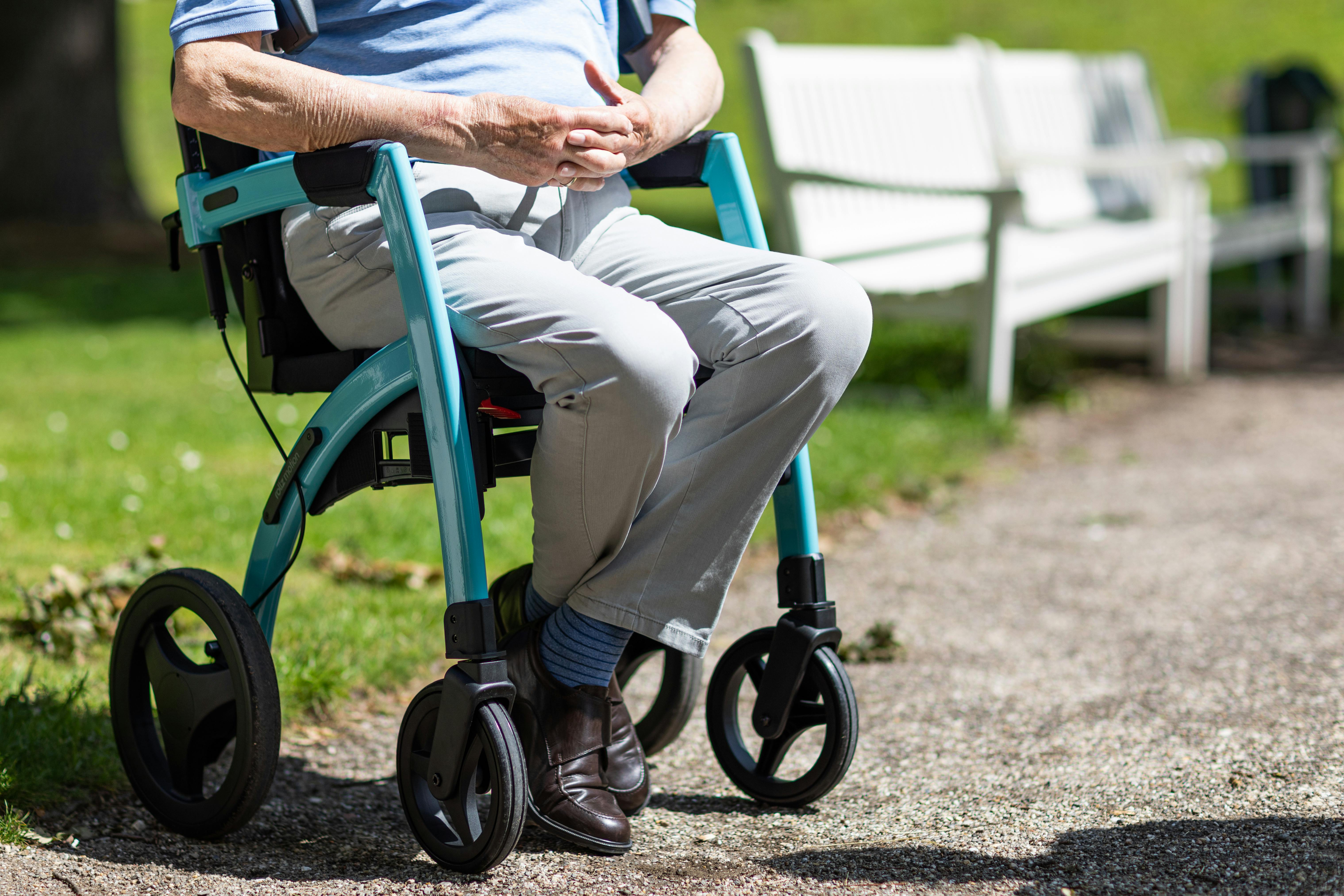
Rollator vs Walker: Which Mobility Aid Is Right for You?
Compare rollators and walkers side by side. Learn the key differences in wheels, brakes, seats, and stability to find th...

Stroke Recovery Equipment Timeline: What You Need at Each Stage
A phase-by-phase guide to mobility equipment during stroke recovery covering acute care, inpatient rehab, home transitio...

How to Safely Transfer an Elderly Person to and from a Wheelchair
Step-by-step guide to safe wheelchair transfers. Covers bed to wheelchair, wheelchair to car, toilet transfers, and when...